Flights from and to Lisbon Airport — Complete Guide to LIS Routes and Connections
Lisbon Humberto Delgado Airport (LIS), known by its IATA code LIS and ICAO designation LPPT, is Portugal's principal international gateway and one of southwestern Europe's most strategic aviation hubs. The airport handles a remarkably diverse route network — from short domestic hops to the Azores and Madeira, to transatlantic services across Brazil and the United States, to long-haul connections reaching Africa and Asia. For travelers planning to fly into or out of Lisbon, understanding what's available, when, and at what price makes a real difference to both budget and convenience.
This guide brings together everything you need to know about flights operating to and from Lisbon Airport. It covers the major route categories, the airlines that serve them, the seasonal patterns that affect availability and pricing, and the practical tips that experienced travelers use to find the right flights for their needs. Whether you're booking a quick European weekend, a long-haul journey to Brazil, or a complex multi-leg itinerary that uses Lisbon as a connecting hub, the information here is designed to help you make informed choices.
Lisbon's position on the western edge of continental Europe gives the airport a unique role in global aviation. It's geographically the closest major European hub to the Americas, which historically made it a strategic stop for transatlantic flights and continues to make it a natural gateway between Europe and Latin America today. The airport's deep linguistic and cultural ties to Brazil, Portuguese-speaking Africa, and other former colonies have produced a route network that is unusually rich for an airport of its size, with direct services to destinations that few other European hubs offer.
What is the Lisbon Airport Flight Network?
LIS handles approximately 35 million passengers annually in normal operating years, with traffic distributed across more than 80 airlines and 150+ destinations worldwide. The route network breaks into several broad categories: domestic Portuguese routes, intra-European Schengen and non-Schengen flights, transatlantic services to North and South America, African routes (particularly to Lusophone Africa), and a smaller but growing Asian and Middle Eastern segment. Each category has its own seasonal patterns, airline mix, and pricing dynamics.
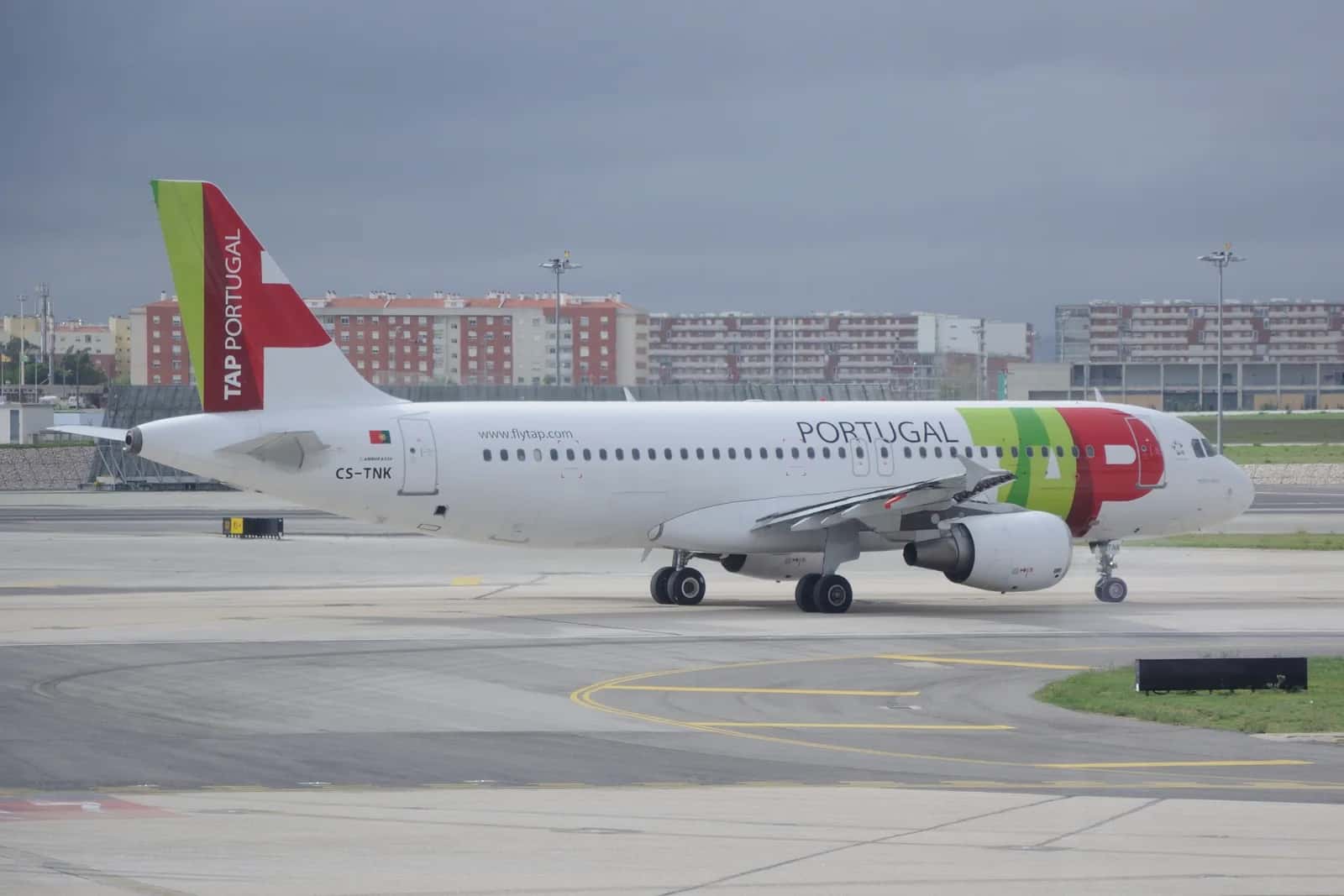
TAP Air Portugal, the country's flag carrier, operates from Lisbon as its primary hub and accounts for roughly 50% of all flight movements. The airline's network is heavily oriented toward Brazil, the United States, Africa, and Europe, and its hub-and-spoke model means that many international travelers pass through Lisbon as a connecting point rather than as their final destination. This connecting traffic is one of the reasons Lisbon's route network is broader than the city's own travel demand would suggest — TAP needs feeder flights from many European cities to fill its long-haul services.
Beyond TAP, the airport hosts substantial low-cost carrier operations, particularly Ryanair and easyJet, which use LIS for European leisure routes. Major full-service European carriers — Lufthansa, Air France, KLM, British Airways, Iberia — operate the standard hub feeders connecting Lisbon to their respective hubs. North American carriers including United, American, and Delta operate transatlantic services. Brazilian carriers LATAM and GOL fly to São Paulo, with TAP providing the largest share of Brazil capacity.
The full airline roster is detailed on our airlines at Lisbon Airport page, which lists every carrier with its terminal assignment and route information. For terminal-specific guidance, our Lisbon Airport terminals guide covers the layout of T1 and T2.
Domestic Portuguese Flights
Portugal's domestic flight network is small but essential, particularly for connections to the Atlantic islands of Madeira and the Azores, which are not served by ground transport. Lisbon serves as the central hub, with multiple daily flights to all major Portuguese destinations operated primarily by TAP Air Portugal and TAP Express, supplemented by Azores Airlines (SATA), Ryanair, and easyJet on select routes.
The Lisbon-Porto route is one of the busiest air corridors in Portugal, with hourly flights during peak periods. Flight time is roughly 50 minutes, and the route serves both leisure and business travelers. Despite the high-speed Alfa Pendular train providing a competitive 2.5-hour rail option, the air route remains popular for travelers connecting onward from international flights or those prioritizing speed. Round-trip fares typically range from €60 to €180 depending on advance booking and demand.
Flights to Faro in the Algarve operate primarily during the spring through autumn tourist season, though some year-round service exists. Faro is the gateway to Portugal's southern beach resorts and golf destinations, and direct flights save several hours compared to ground transport, particularly for travelers with luggage. TAP, easyJet, and Ryanair all serve this route. Off-season fares can be very competitive, while peak summer prices reflect strong demand from northern European tourists.
The Atlantic islands present the most distinctive domestic flying experience. Funchal, the capital of Madeira, is served by 8 to 12 daily flights from Lisbon, with the journey taking about 95 minutes. Madeira's airport is famous for its dramatic approach over the ocean and its sometimes-challenging crosswind landings, but operations are generally reliable. The Azores comprise multiple islands, with Ponta Delgada (São Miguel) being the primary entry point. Flights take approximately 2 hours 15 minutes from Lisbon, with TAP and Azores Airlines providing the bulk of capacity. The islands' relative isolation makes air links essential, and the Portuguese government regulates several routes to ensure adequate service.
European Flights — Major Routes and Hubs
The European route network is the largest segment of Lisbon's traffic by flight count, with hundreds of weekly departures connecting Lisbon to most significant European cities. The intensity of service varies dramatically by destination, with some routes operating multiple times daily and others as seasonal or weekly services.
The London market is the busiest international corridor from Lisbon, with services to Heathrow (BA, TAP), Gatwick (TAP, easyJet), Stansted (Ryanair), and Luton (easyJet) providing extensive capacity throughout the day. Combined frequency exceeds 12 daily flights between Lisbon and the London airports, making same-day connections in either direction highly reliable. London Heathrow connects further to British Airways' global network, while the low-cost airports primarily serve point-to-point traffic.
Paris is similarly well-served, with Air France operating multiple daily Charles de Gaulle flights, plus easyJet and Ryanair providing low-cost service to Orly and Beauvais respectively. TAP also operates Paris flights as part of its hub feeder network. Combined frequency makes same-day connections reliable, and the route's importance is reinforced by Lisbon's significant Portuguese expatriate community in France.
The Madrid corridor, despite the relatively short distance, supports substantial daily traffic. Iberia operates the bulk of capacity, with TAP providing additional services. The Madrid connection is particularly valuable for travelers heading to Latin American destinations not directly served from Lisbon, since both Iberia and Iberia partner Air Europa offer extensive Latin American networks from Madrid.
Other major European hubs reached daily from Lisbon include Frankfurt (Lufthansa, TAP), Amsterdam (KLM, TAP), Rome (TAP, ITA Airways), Brussels (TAP, Brussels Airlines), Zurich (Swiss), Munich (Lufthansa), and Vienna (Austrian Airlines, TAP). Each of these connections enables onward travel through the respective alliance hubs to a wide range of secondary destinations.
Other European Destinations
Beyond the major hubs, LIS operates services to a wide range of European cities, with frequencies ranging from daily to seasonal. Spanish destinations include Barcelona, Bilbao, Seville, and Valencia, served by various combinations of Iberia, Vueling, and TAP. Italian routes extend beyond Rome to Milan, Venice, Bologna, and Naples, with TAP, ITA Airways, and Ryanair providing varying combinations.
Eastern European connections have grown significantly in recent years. Warsaw is served by LOT Polish Airlines and TAP. Prague has TAP service. Budapest is served seasonally by several carriers including Wizz Air. Bucharest, Sofia, and other Balkan destinations have varying combinations of low-cost and full-service options. The growth of these routes reflects both the increasing economic integration of Eastern Europe with Portugal and the expansion of low-cost carrier networks.
Scandinavian destinations include Copenhagen, Stockholm, Oslo, and Helsinki, with TAP, SAS, Norwegian, and various low-cost carriers providing service. Service intensity varies seasonally, with summer schedules including more frequent service to support both leisure travelers heading south and Portuguese travelers heading north. Iceland is served seasonally via Icelandair connections.
The Mediterranean leisure destinations — Greek islands, Turkey, Croatia, Cyprus, Malta — see significant seasonal traffic during the spring through autumn period. Many of these routes are operated by low-cost carriers and tour operators rather than TAP, with carrier mix varying by year and season. Booking patterns tend to be more last-minute for these destinations during summer, when capacity is plentiful.
Brazilian Routes — Lisbon's Transatlantic Strength
The Brazilian route network is one of Lisbon Airport's most distinctive features and the foundation of TAP's long-haul business. No other European airport offers comparable Brazilian connectivity, reflecting the deep historical and linguistic ties between Portugal and Brazil and the substantial population movements in both directions. For travelers from elsewhere in Europe, Lisbon often offers the most efficient routing to many Brazilian cities.
São Paulo (GRU) is the flagship Brazilian destination, served by multiple daily TAP flights plus LATAM service. The route operates with widebody aircraft including the Airbus A330neo and Boeing 777-200ER, with flight time approximately 10 hours 30 minutes. São Paulo Guarulhos provides extensive onward connections within Brazil and to other South American destinations, making it the natural gateway for travelers heading to São Paulo state, Minas Gerais, or southern Brazil.
Rio de Janeiro (GIG) is similarly well-served, with TAP operating multiple weekly flights, LATAM providing additional capacity, and seasonal increases during the South American summer. The Rio route is particularly popular with leisure travelers, while São Paulo handles a higher proportion of business traffic. Both routes have strong demand year-round but peak during the South American summer (December-February) and during major events like Carnival.
Beyond São Paulo and Rio, TAP operates direct services to Salvador, Recife, Fortaleza, Brasília, Belo Horizonte, Porto Alegre, and Natal, making Lisbon one of very few European airports with service to multiple Brazilian regional cities. These routes serve substantial Portuguese expatriate communities in Brazil and Brazilian visitors to Portugal, with seasonal demand patterns shaped by school holidays, business travel, and the weather preferences of leisure travelers in both directions.
Pricing on Brazilian routes varies enormously by season and advance booking. Round-trip economy fares can range from approximately €500 during low-demand periods with significant advance booking to over €2,000 during peak periods. Premium economy and business class fares scale similarly. Travelers with flexibility can find significant savings by traveling outside peak periods and booking 2-4 months in advance. The TAP Miles & Go loyalty program offers reasonable redemption rates for Brazilian flights, particularly during off-peak periods.
Other South American Destinations
While Brazil dominates Lisbon's South American route map, several other destinations are served. Caracas, Venezuela has historically been a TAP destination, though service has been variable in recent years given the political and economic situation in Venezuela. Bogotá, Colombia is served by TAP with several weekly flights, providing direct connectivity to Colombia for European travelers and offering Colombians a non-US routing option to Europe.
Other South American destinations are typically reached via connecting flights through Madrid (Iberia), São Paulo (TAP, LATAM), or other hubs. Buenos Aires, Lima, Santiago, and Montevideo all require connections from Lisbon. The connections through São Paulo or Madrid are generally efficient for these destinations, with TAP and Iberia frequent flyer programs both offering extensive Latin American networks.
For travelers planning South American trips, the routing decision often depends on the specific destination, schedule preferences, and pricing. Lisbon-via-São Paulo works well for southern South America. Madrid via Iberia often offers more options for the Andean countries. The various TAP-LATAM and Iberia-LATAM partnerships create code-share opportunities that can simplify booking complex multi-country itineraries.
North American Routes
The North American route network from Lisbon has expanded significantly over the past decade, supporting both growing Portuguese-American travel demand and Lisbon's emergence as a popular European tourism destination. TAP Air Portugal has been the principal driver of this expansion, building Lisbon into a meaningful European gateway for North American travelers heading to broader European destinations as well as Portugal itself.
TAP operates multiple daily flights to New York, primarily Newark (EWR) and JFK, with combined capacity supporting a strong New York market. Boston is served by daily flights, reflecting the substantial Portuguese-American community in New England. Washington Dulles, Miami, and Toronto all have TAP service, with additional North American destinations served seasonally or with multiple weekly flights.
Beyond TAP, United Airlines operates daily Newark service, American Airlines flies daily from Philadelphia, Delta operates from JFK, and Air Canada serves Toronto. The combined capacity provides strong daily frequencies between Lisbon and the major North American gateways, making same-day connections in either direction generally reliable.
The combination of nonstop services and connecting options through other European hubs gives North American travelers extensive flexibility for reaching Lisbon. For destinations not directly served from major North American cities, connections via TAP through Lisbon often work well, since TAP has built its network to support exactly this kind of connecting traffic.
Pricing on North American routes follows the typical transatlantic patterns, with substantial seasonal variation. Summer (June-August) sees the highest demand and prices, with shoulder seasons (April-May, September-October) offering better value. Winter fares can be significantly lower, with promotional fares occasionally falling below €400 round-trip from Boston or New York to Lisbon. Booking 2-4 months in advance generally secures the best fares for peak travel periods.
African Routes
Lisbon's African route network is unusually rich for a European airport of its size, reflecting Portugal's colonial history and the substantial Lusophone African communities in Portugal. Direct services to multiple African destinations make Lisbon a meaningful gateway for travelers heading to several countries that have limited direct service from other European hubs.
Luanda, Angola is the most prominent African destination, served by TAP with multiple weekly flights and by TAAG Angola Airlines, the Angolan flag carrier, with daily service. The route handles both substantial Portuguese expatriate traffic and Angolan business and leisure travelers, with widebody aircraft providing capacity. Combined capacity makes daily service reliable in both directions, and connecting options at Luanda extend service to other Angolan cities and regional African destinations.
Maputo, Mozambique receives several weekly TAP flights, supplemented by LAM Mozambique Airlines on certain routes. The route serves the Mozambican community in Portugal and Portuguese business travelers heading to Mozambique. Other Lusophone African destinations include São Tomé and Príncipe, served by STP Airways and TAP, and various Cape Verde destinations served by Cabo Verde Airlines and TAP.
Cape Verde is served extensively, with multiple daily flights to Sal, Praia, and Boa Vista — the Cape Verdean tourist destinations particularly popular with European travelers seeking winter sun. TAP and Cabo Verde Airlines provide most capacity, with peak season seeing additional charter and seasonal scheduled services. The route is one of Lisbon's most distinctive offerings, with few European hubs offering comparable Cape Verde access.
Beyond Lusophone Africa, LIS connects to Casablanca (Royal Air Maroc), Marrakech (Royal Air Maroc, easyJet, TAP), Tunis (Tunisair), Algiers (Air Algerie), Johannesburg (TAP, sometimes via codeshare), Nairobi (via connections), and several other African destinations through varying combinations of direct flights and connections.
Asian Destinations
Asian connectivity from Lisbon is more limited than for some larger European hubs, reflecting Lisbon's geographic position and the smaller market size for Asian travel from Portugal. However, several direct services and many efficient connecting options provide reasonable access to Asian destinations.
TAP operates services to Tel Aviv, providing direct access to Israel for both leisure and business travelers. The route is particularly important for the Portuguese Jewish community and for tourism in both directions. Frequency varies seasonally, with year-round service supplemented by additional flights during peak periods.
For East and Southeast Asian destinations — Tokyo, Seoul, Singapore, Bangkok, Hong Kong, Shanghai, Beijing — most travelers connect through other European hubs. Frankfurt (Lufthansa), Paris (Air France), Amsterdam (KLM), London (BA, Virgin Atlantic), and Istanbul (Turkish Airlines, which offers extensive Asian connectivity) all provide efficient routing options. Turkish Airlines' extensive network from Istanbul has made it a particularly popular routing for Lisbon-Asia travelers, often offering competitive fares and good schedules.
The Indian subcontinent is similarly typically reached via connections, with no direct LIS-India service in most years. Connecting via Doha (Qatar Airways), Dubai (Emirates), London, or other European hubs works well, with connection times and pricing varying by routing.
Middle Eastern Routes
The Middle East is well-connected to Lisbon through several major Gulf carriers, providing both direct destination service and substantial connecting capacity to Asia, Africa, and Australia. These connections have transformed the available routing options for Lisbon travelers heading to those broader regions.
Qatar Airways operates daily Doha service, providing extensive onward connectivity to Asia, Australia, the Indian subcontinent, and parts of Africa. The Qatar Airways product is generally regarded as among the world's best, with strong economy and premium-cabin offerings, and the Doha hub provides efficient connections in most directions. For Lisbon travelers heading to Bangkok, Singapore, Sydney, or major Asian cities, the Qatar Airways routing through Doha often offers competitive pricing and strong service quality.
Emirates operates daily Dubai service with a Boeing 777, similarly providing extensive global connectivity. The Dubai hub serves Africa, Asia, Australia, and the Indian Ocean region with extensive frequencies, making this another efficient routing option for many destinations.
Turkish Airlines connects Lisbon to Istanbul with multiple weekly flights, and from Istanbul to a vast network of international destinations. Turkish has positioned itself as a major connecting carrier with strong Asian, African, and Middle Eastern coverage. The connections through Istanbul often offer good pricing and schedule options.
Direct Middle Eastern destinations include Tel Aviv (TAP), with other cities — Cairo, Amman, Beirut — typically reached via connections through Istanbul, Doha, Frankfurt, or other European hubs.
Seasonal and Charter Services
A significant portion of Lisbon's traffic is seasonal, particularly during the summer leisure period and the Christmas and Easter holiday weeks. Understanding the seasonal patterns helps travelers find the best fares and avoid the most congested periods.
Summer (June through August) sees the highest passenger volumes, driven by European tourists heading to Portuguese destinations and Portuguese travelers heading to Mediterranean leisure destinations. Madeira sees particularly strong summer demand, as does the Algarve region (served via Faro). Many seasonal charter and scheduled services operate only during these months.
Winter has its own seasonal patterns. Cape Verde becomes particularly popular as a winter sun destination, with frequencies increased compared to summer. Caribbean destinations served via connecting hubs see strong winter demand. Holiday travel — Christmas, New Year, Easter — produces predictable demand spikes that affect both pricing and availability.
Charter and seasonal scheduled services frequently operate on tour-operator-led routes, with destinations including Greek islands, Egyptian Red Sea resorts, Caribbean cities, and various other leisure destinations. These services come and go year by year based on tour operator decisions and market conditions, making any specific charter route an unreliable basis for permanent travel planning. The advantage of these services is often pricing — charter packages can offer substantial savings compared to scheduled fares for similar dates and destinations.
Booking Tips and Best Practices
Securing good fares from Lisbon requires applying the same principles that work for international travel generally, with some Lisbon-specific considerations. Advance booking helps for most route types, with 2-4 months ahead generally being the sweet spot for international fares. Last-minute booking can occasionally find deals on European low-cost routes but generally produces inferior pricing for transatlantic and other long-haul routes.
Flexibility on dates produces significant savings. Tuesday and Wednesday departures often price lower than weekend flights. Avoiding the peak summer period (mid-June through mid-August) typically saves 20-40% on European leisure routes. Christmas, New Year, and Easter weeks are particularly expensive — booking either side of these periods captures most of the holiday benefit at substantially lower cost.
Comparison shopping across multiple booking platforms is essential. Direct booking on the airline website often offers the best service in case of changes or disruptions, but pricing is sometimes lower through online travel agencies. Meta-search engines like Skyscanner, Google Flights, and Kayak help identify the best fares quickly. The TAP Air Portugal website often has promotional fares not available on third-party sites.
For complex multi-leg itineraries, booking through a travel agent or using airline alliance booking tools can simplify the process and protect against connection disruptions. Single-ticket bookings provide stronger protection than separate tickets when connections fail, with the airline responsible for re-accommodation when delays cascade.
Loyalty programs offer meaningful value for frequent flyers. TAP Miles & Go is particularly useful for travelers regularly flying TAP routes, with reasonable award redemption rates and good elite-status benefits. Star Alliance status from any partner program provides benefits across TAP and partner airlines. Other alliance memberships matter when flying respective carrier groups through Lisbon.
Best Times to Fly
The optimal time to travel from Lisbon depends entirely on destination, purpose, and budget priorities. For European leisure destinations, May, June, September, and October offer warm weather without peak crowds and prices. For Brazilian travel, the European summer (which is Brazilian winter) often has lower fares than the December-February peak. North American summer is busy in both directions; October-November and February-March often provide better value while still offering good weather at most destinations.
Weather considerations matter for some destinations. Madeira and the Azores have year-round mild climates but more rain in winter. Cape Verde is reliably warm year-round, making it appealing during European winter. Brazilian destinations have varied climates by region — northeast Brazil is warm year-round while São Paulo has more pronounced seasonal variation.
Business travel patterns affect pricing on routes with significant business demand. The Madrid, London, Paris, and Frankfurt corridors see business demand patterns with peaks Tuesday through Thursday. Flying outside these peaks often produces lower fares. International business travel similarly peaks in spring and autumn, with summer and winter holidays showing reduced business demand and corresponding fare softness.
Holiday periods to avoid for budget reasons (or seek out for cultural experiences): Carnival in February (especially affecting Brazilian routes), Easter week, July-August European holidays, Christmas and New Year. Each of these produces premium pricing and high demand. Travelers with flexibility benefit substantially from working around these windows.
Connecting Flights — Lisbon as a Hub
Lisbon functions as a connecting hub for many travelers, particularly those flying TAP between European cities and Brazilian, African, or North American destinations. Understanding the connection process helps make the most of these journeys.
Minimum connection times at LIS depend on the connection type. Schengen-to-Schengen connections typically require 45 minutes minimum. Schengen-to-non-Schengen connections (or vice versa) typically require 60-75 minutes due to passport control. International-to-international connections often need 75-90 minutes, with longer minimums when changing terminals or for tight Brazilian-bound itineraries with luggage.
For TAP Star Alliance hub operations, the airport has been designed to facilitate efficient connections. The Schengen/non-Schengen sectors are well-organized, transit areas have appropriate facilities, and signage is clear. Connection arrows direct passengers efficiently, and TAP transfer staff handle passengers with tight connections proactively.
For travelers booking connections through TAP, the airline's automated rebooking handles most missed-connection scenarios, with passengers placed on the next available flight at no charge when delays cause missed connections. Holding onto baggage receipts and boarding passes through the entire journey simplifies any disruption-handling.
Self-booked connections (separate tickets) carry the risk that the second airline has no obligation to honor the booking if the first flight is delayed. For this reason, single-ticket connections through TAP or partner airlines are generally preferable when both legs are international. The pricing difference between booked-together and separately-booked itineraries is often modest, and the protection benefit can be significant in the rare event of disruption.
For arrivals into Lisbon as a final destination, see Lisbon Airport arrivals for detailed guidance on the post-flight process. For departures, the equivalent Lisbon Airport departures page covers everything you need to know on the way out. And for the journey from the airport to your final Lisbon destination, our guide on getting to Lisbon city center provides practical detail on Metro, Carris airport bus, taxi, and private transfer options.
Ground Transport Coordination with Flight Times
For travelers booking flights to or from Lisbon, coordinating ground transport with flight times is part of the planning process. The airport's location in the northeast of central Lisbon, approximately 7 kilometers from the city center, makes ground access relatively quick compared to many international airports — but appropriate buffer time still matters, particularly for early-morning or late-evening flights.
The Lisbon Metro Red Line connects the airport directly to the Metro system, with journey times of about 20 minutes to central interchanges. The Metro operates from approximately 06:30 to 01:00, meaning very early-morning flights and late-night arrivals fall outside Metro service hours. For these travelers, taxis and ride-hailing remain the practical options.
Carris bus 783 service connects the airport to central Lisbon and the main train stations, operating from early morning to late evening. Journey time is approximately 25 minutes depending on traffic and stop selection. The service is reliable, runs on consistent schedules, and offers good value compared to taxis for travelers with limited luggage.
Taxis and ride-hailing services (Uber, Bolt, FreeNow) operate 24/7 from the airport, with metered taxis from official ranks at the terminals. Approximate fares to central Lisbon run €15-25 depending on destination and traffic. For travelers arriving outside public transport hours, taxis are essentially the only option, and pricing is reasonable compared to many comparable European cities.
For airport-to-flight planning, allowing 2 hours from central Lisbon for European flights and 2.5-3 hours for international long-haul flights typically provides comfortable buffer. This includes ground transport, check-in, security, and any unexpected delays. During peak summer or holiday periods, slightly more buffer is wise. Travelers staying at airport-area hotels with shuttle service have shorter ground-time requirements but should still account for shuttle frequencies and timing.
Looking Ahead — Route Network Trends
Lisbon's flight network continues to evolve, with several notable trends shaping future development. Sustainability initiatives are increasingly visible, with airlines progressively introducing more fuel-efficient aircraft and the airport investing in ground operations sustainability. TAP's fleet renewal toward A330neo and A321LR aircraft has improved both efficiency and passenger experience on many routes.
Capacity constraints at the current airport have been an ongoing concern, with proposals for a new airport at Alcochete or other locations under discussion for many years. The eventual development of additional airport capacity will reshape Portuguese aviation, though current planning suggests the current airport will continue operating with capacity expansions and operational improvements for the foreseeable future.
Route development continues to focus on the airport's core strengths — Brazilian connectivity, North American services, and intra-European leisure routes. New point-to-point routes from low-cost carriers continue to emerge, while TAP's hub-and-spoke network gradually adapts to demand patterns. The competitive landscape continues to shift, with airlines entering and exiting various routes based on market conditions.
For travelers, this evolving network means that route options should be checked close to travel dates rather than assumed from past patterns. Even well-established routes occasionally see schedule reductions or carrier changes. The general trajectory has been growth in international connectivity, particularly for the Brazilian, African, and North American markets that form the foundation of Lisbon's distinctive route network.
Looking for the right flight to Lisbon? Get in touch.
You May Also Like
- Lisbon Airport Airlines
- Lisbon Airport Terminals
- How to Get from Lisbon Airport to City Center
- Lisbon Airport Departures
Update (2023): The Aerobus shuttle service (formerly aerobus.pt) was discontinued. Carris urban bus lines 783, 728, 744 and 24-hour night line 208 now provide all public airport–city connections at €2.30 per ride.