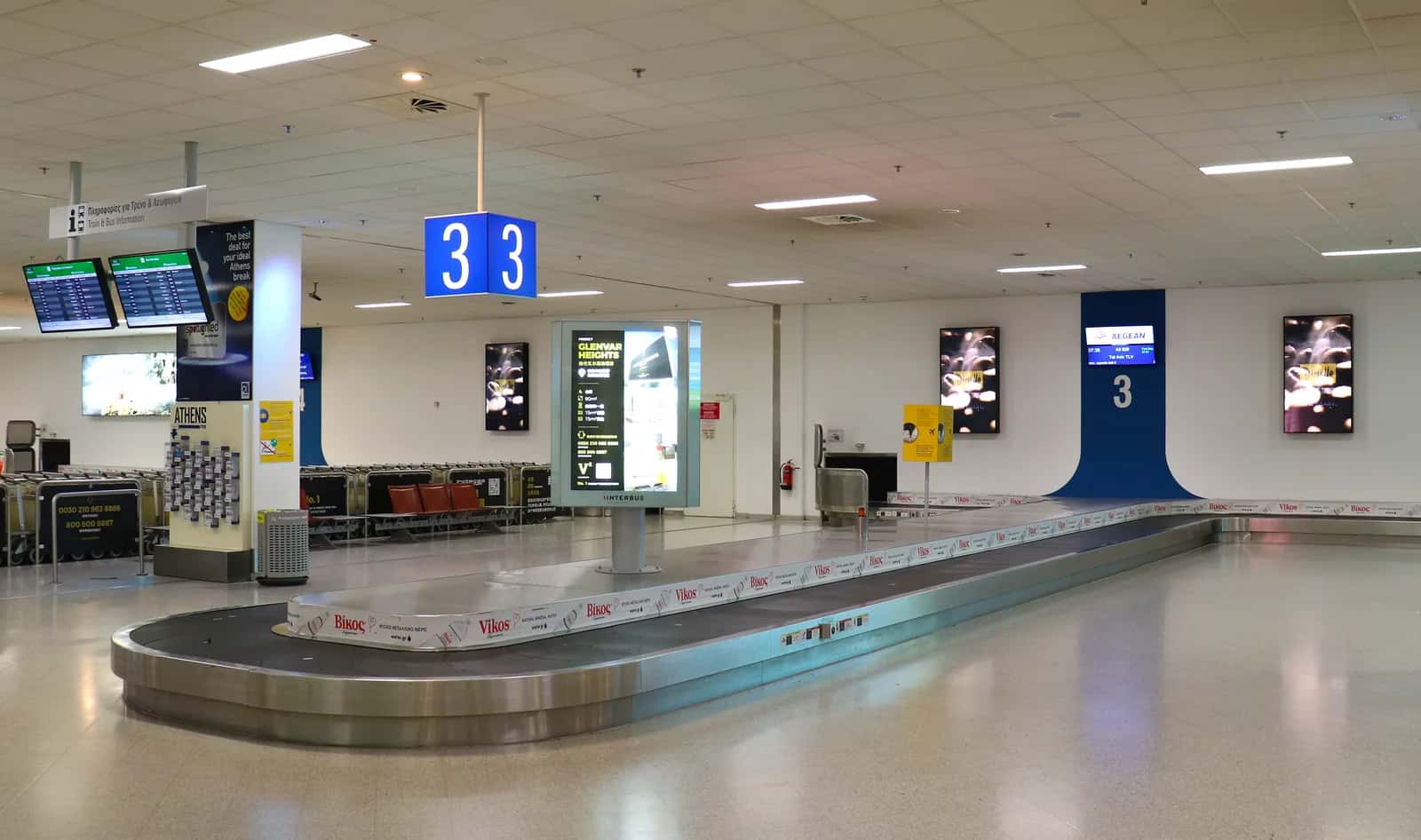
Lisbon Airport Arrivals
Arriving at Lisbon Humberto Delgado Airport (LIS) is, for many travellers, the first chapter of a Portuguese trip — and like most first chapters, it sets a tone. The airport sits unusually close to central Lisbon, just seven kilometres north of Praça do Comércio, which means that the arrival experience here is remarkably quick by international standards. From the moment your wheels touch the runway to the moment you are standing in front of your hotel, the journey can be as short as forty minutes if everything aligns. Understanding what to expect, however, makes the difference between an arrival that feels effortless and one that feels disorienting.
This guide is for anyone arriving at Lisbon Airport and wanting a complete picture of what comes next: where the plane will likely park, how passport control works, where to find your bags, how to get into the city, what to do if your flight is delayed or your luggage goes missing, and the dozens of small practical questions that travellers actually have when they land in an unfamiliar place. The information here applies to passengers arriving on any flight type — long-haul intercontinental, short-haul European, low-cost, or charter — with notes on where the procedures differ.
Lisbon's airport is well-connected to the city, broadly efficient in normal conditions, and laid out logically. It is also a busier and more constrained airport than its size suggests, with a single runway handling a substantial volume of traffic and Terminal 1 operating close to capacity during peak periods. Knowing the rhythm of a typical arrival here helps you plan around the bottlenecks rather than getting caught in them.
What is Arriving at Lisbon Humberto Delgado Airport?
Lisbon Airport (IATA code LIS, ICAO code LPPT) is the principal international gateway to Portugal and the home base of TAP Air Portugal, the country's flag carrier. It handles around 35 million passengers in a normal year, ranking it among the busier mid-sized hubs in Western Europe. The airport is operated by ANA Aeroportos de Portugal, part of the Vinci Airports network, and serves as a key hub between Europe, the Americas, and Africa — particularly for routes connecting Lusophone countries.
The airport has two passenger buildings: Terminal 1 and Terminal 2. For arriving passengers this is straightforward — virtually all arrivals come into Terminal 1. Terminal 2 is dedicated to low-cost departures only, with no arrival operations. So no matter which airline brought you to Lisbon, you will disembark, clear formalities, and collect your luggage at Terminal 1. This single-terminal arrival flow simplifies things considerably and means you can plan your transport pickup confidently around T1 without worrying about which building to direct a friend or driver to.
Once you exit the customs area, you will find yourself in a relatively compact arrivals hall with the standard mix of facilities: information desks, ATMs, currency exchange counters, several cafés, a pharmacy, telecommunications shops, car rental counters, and signage directing you to the various ground transport options. The hall can feel busy when several long-haul flights land within a short window, but it is not so large that you will get lost. Most travellers find their way to whichever transport mode they have chosen within ten or fifteen minutes of clearing the formalities.
Live Arrivals Information — Where to Check
Knowing whether your flight is on time, delayed, or has just landed is the most basic piece of practical information for anyone meeting an arriving passenger or trying to coordinate onward travel. Several reliable sources provide live arrivals data for Lisbon Airport, and they update with reasonable speed throughout the day.
The official ANA Aeroportos de Portugal website maintains a live arrivals board for Lisbon Airport, accessible from any browser on a phone or laptop. It lists each inbound flight with its scheduled time, estimated time, status (in transit, landed, baggage delivered, etc.), and gate or stand information once available. The same data is mirrored on the airport's mobile app, which is free and sometimes more responsive than the web version, particularly during periods of heavy traffic when the website slows down.
Third-party trackers — FlightRadar24, Flightaware, and the airline's own apps — offer parallel coverage and sometimes update marginally faster. Each has its own strengths. FlightRadar24 shows the actual aircraft position over the Atlantic or Iberian Peninsula in real time, which is reassuring when a long-haul flight is inbound and you want to confirm it is on its expected approach. The airline's app, by contrast, often delivers the most reliable estimated landing time because it draws directly on the carrier's operational data.
Inside the airport itself, large display monitors show arrivals information in the public areas of Terminal 1, near the information desk and along the corridor leading from baggage claim to the public exit. These screens are the source meeters and greeters typically rely on. They show the same data as the online sources but are easy to scan visually if you are already on site waiting.
Arrival Terminals — T1 Handles Virtually All Arrivals
One of the practical simplifications at Lisbon Airport is that all arriving passengers come through Terminal 1. Terminal 2 is, in effect, a low-cost departure annex — flights from carriers like Ryanair, easyJet, and Wizz Air check in and depart from T2, but their inbound flights land at T1. This means whether you are arriving on a TAP long-haul flight from São Paulo, an easyJet hop from Manchester, or a charter from Marrakech, your arrivals experience runs through the same set of facilities.
Terminal 1 is divided into two main zones: the Schengen area (for arrivals from other Schengen-zone countries, where no passport control is needed) and the non-Schengen area (for arrivals from the UK, Ireland, the Americas, Africa, Asia, and elsewhere outside the Schengen zone, where passport control applies). The terminal handles both flows efficiently in most conditions, with separate corridors leading to the appropriate processing area before they merge at baggage claim.
For travellers connecting onward from a Lisbon arrival, the same terminal handles both incoming arrivals and the connection process. Connection signage is generally clear, and Star Alliance and TAP staff are available to assist passengers with tight connections. Connection-only travellers stay airside throughout. For passengers with longer onward journeys or those changing terminals to T2 for an outbound low-cost flight, the inter-terminal shuttle bus is free and runs frequently between T1 and T2 — a journey of about seven minutes during quieter periods, slightly longer at peak.
Schengen vs Non-Schengen Arrival Procedures
The biggest divergence in arrival procedures at Lisbon Airport comes down to whether your flight originated within or outside the Schengen Area. Schengen arrivals — flights from Madrid, Paris, Rome, Berlin, Amsterdam, and most other continental European destinations — are processed without passport control. You disembark, follow the signs through the Schengen corridor, and proceed directly to the baggage claim hall. The whole process from gate to baggage, in normal conditions, takes about ten minutes for an average-sized flight.
Non-Schengen arrivals — flights from the UK, Ireland, North America, South America, Africa, Asia, the Middle East, and other non-Schengen destinations — go through Portuguese border control after disembarking. This adds a passport inspection step that can range from quick (a few minutes during quiet periods) to slow (thirty to forty-five minutes when multiple long-haul flights arrive within a short window, particularly the morning bank of transatlantic flights from the Americas). After passport control, non-Schengen passengers join the same baggage claim flow as Schengen arrivals.
One specific point worth noting: passengers arriving on a flight from outside the Schengen area but holding EU or Schengen passports can use the e-gates if their passport is biometric (most are). The e-gates significantly accelerate the process — typically less than a minute per passenger — and are worth using whenever they are open. They are clearly marked and located alongside the manual passport control booths.
Passport Control and Immigration at LIS
Portuguese border police (Serviço de Estrangeiros e Fronteiras, SEF, or its successor under the new agency structure) handle passport control at Lisbon Airport. Officers are generally professional and efficient, and the experience is comparable to passport control at any major European airport. Most passengers pass through without any extended questioning.
For non-EU citizens, the standard process involves the officer checking the passport, scanning it through the machine reader, occasionally taking a photograph or fingerprints (depending on nationality and the new EU Entry/Exit System rollout schedule), and stamping the passport with the entry stamp showing date and entry point. If you are visiting Portugal as a tourist on a visa-exempt passport (US, Canadian, Brazilian, Australian, Japanese, and many others), the process is straightforward — show your passport, answer any brief questions about purpose and length of stay, receive your stamp, and proceed.
For passengers travelling on Schengen visas, the visa was checked at the original departure airport and the entry into Portugal is recorded electronically without an additional check at LIS. Passengers transferring within the airport from a non-Schengen flight to a Schengen flight clear passport control at Lisbon as their first Schengen entry, then proceed to their connecting gate.
If your situation is unusual — long-stay visa, residence permit, refused entry document, family member of an EU citizen — and you anticipate questions, prepare your supporting documents in advance. Officers will work through the details, but having papers ready makes the process much faster. For travellers whose Portuguese is limited, English is widely spoken at passport control and most other interactions in the airport.
Customs and Baggage Claim
Baggage claim at Lisbon Airport is a single hall with multiple carousels, each assigned to one or more arriving flights. The carousel number is displayed on monitors above the entrance to the hall and on smaller screens at each individual carousel. Bags from a typical arriving flight start appearing on the belt within fifteen to twenty minutes of the aircraft parking, with the full bag delivery taking another fifteen to twenty minutes from there. Long-haul flights with maximum capacity and multiple cargo holds occasionally take longer.
If your bag does not appear, the airline's lost baggage office (operated by Portway or a similar handling agent on behalf of most carriers) is located in the baggage claim hall — look for the signs indicating "Lost Baggage" or the airline's name. File a Property Irregularity Report (PIR) before exiting customs, as initiating the claim is significantly easier from inside the secure zone than from outside. The PIR includes a tracking reference you can use to check the bag's status online. In most cases, lost luggage at LIS is located within twenty-four to forty-eight hours and delivered to your accommodation address by courier at no charge.
Customs is the final step before exiting into the public arrivals hall. Portugal follows EU customs rules: travellers arriving from non-EU countries pass through either the green channel (nothing to declare) or the red channel (something to declare), the choice depending on what you are bringing in. Common things that put you in the red channel include cash over €10,000, commercial quantities of goods, or restricted items like meat and dairy products from outside the EU. Most leisure travellers walk straight through the green channel. Random inspections do occur but are not common for typical tourists with normal luggage.
For travellers arriving from another EU country, customs is essentially a walk-through with minimal scrutiny — EU internal market rules mean there are no customs formalities for goods within personal allowances, which are generous enough to cover any reasonable holiday shopping.
EU Passenger Rights for Delayed and Cancelled Arrivals
If your flight to Lisbon is significantly delayed or cancelled, EU Regulation 261/2004 may give you the right to compensation. The regulation applies to all flights departing from EU airports regardless of carrier, and to flights arriving at EU airports operated by EU carriers. Lisbon Airport falls within this framework.
For arrivals delayed by three hours or more on the scheduled arrival time, passengers may be entitled to fixed compensation ranging from €250 to €600 depending on the flight's distance, unless the delay was caused by extraordinary circumstances outside the airline's control (severe weather, air traffic control strikes, security incidents). Compensation claims are submitted to the airline directly within the time window allowed by Portuguese law (typically several years after the flight). Most major airlines have streamlined online claim portals for EU 261 compensation — TAP, easyJet, Ryanair, British Airways, and the major US carriers all do.
For long delays in transit (typically over two hours for short-haul, three for medium-haul, four for long-haul), the airline must provide care: meals, refreshments, and accommodation if the delay extends overnight. These are sometimes distributed via vouchers at the gate or as direct provisions, and sometimes the airline asks you to keep receipts and reimburse later. Either way, retain documentation.
For cancelled flights, passengers may choose between rerouting to their final destination at the airline's expense (on the next available flight, even with a different carrier if necessary) or a full refund. Travel insurance often provides additional coverage for expenses beyond what EU 261 covers, including pre-paid hotel nights or onward travel that becomes unusable due to the cancellation. If you are travelling on a non-EU carrier from a non-EU origin, EU 261 does not apply — but the carrier's own conditions of carriage may offer parallel rights.
Connecting Flights at LIS
Lisbon is a significant connecting hub, particularly for travellers between Europe and Latin America (Brazil, especially) or between Europe and Africa (Cape Verde, Angola, Mozambique). TAP Portugal operates the bulk of these connections, using LIS as its central pivot point. The minimum connection time published by TAP is typically forty-five to sixty minutes for Schengen-Schengen connections and seventy-five to ninety minutes for transatlantic connections involving the non-Schengen process.
For passengers connecting through Lisbon, the process is straightforward in normal conditions. After disembarking, you follow signs marked "Connections" or "Transfer" rather than "Exit" or "Baggage Claim". This routes you through any required passport control (only if you are crossing between Schengen and non-Schengen zones for your onward flight) and onto a path that loops back into the airside area to find your departure gate. Your checked baggage, if you have any and it was tagged through to your final destination, is transferred between flights automatically.
Single-ticket itineraries through Lisbon offer protection if you miss a connection due to delays — the airline rebooks you on the next available flight at no charge. Self-booked separate tickets place that risk on you, so allow more time between flights if you are managing the connection yourself. The airport is reasonably easy to navigate for connections, but during peak hours queues at security re-screening (if required) and passport control add time, so generous buffers are wise.
Meeting Points and Arrivals Halls
The public arrivals hall at Terminal 1 is the natural meeting point for anyone collecting an arriving passenger. The hall is located on the ground level (Level 0 in Portuguese numbering, or "Piso 0"), accessible from the parking, taxi rank, Carris airport bus stops, and the Metro station entrance through a pedestrian corridor.
If you are meeting someone, the most reliable plan is to agree in advance on a specific landmark within the arrivals area. Common reference points include the central information desk near the main hall entrance, the welcome café on the south side of the hall, or the door at the end of the customs corridor (where arriving passengers physically emerge from baggage claim). The customs exit is the most reliable spot if you want to greet someone the moment they emerge — be there ten minutes before the flight's expected arrival time to allow for processing.
Mobile coverage and WiFi are reliable throughout the arrivals area, so coordination by phone or messaging works well as a backup. The "Lisbon Airport WiFi" network is free and unlimited; you simply accept the terms on the splash page. For SIM-card-less travellers, this lets you message your meeting party as soon as you exit customs, even before reaching them physically.
Transport Options on Arrival
Lisbon's airport is one of the most accessible major-city airports in Europe in terms of public transport. The proximity to the city centre — only seven kilometres — keeps travel times short by any mode you choose, and the variety of options means you can match your transport choice to your preferences and budget.
The Metro Red Line (Linha Vermelha) is the cheapest and often the fastest option for getting to central Lisbon. The Aeroporto station is connected directly to Terminal 1 by a pedestrian corridor. From there, the Red Line runs through Saldanha (a major interchange to the Yellow Line), Alameda (interchange to the Green Line), and east toward Oriente (interchange to the Blue Line and the long-distance train station). A standard ticket costs around €1.80 plus the Viva Viagem reusable card (€0.50). The journey to most central destinations takes 20-30 minutes including transfers. For more on rail-based options, see the Lisbon Airport Metro guide.
Carris bus 783 is a dedicated airport bus service running between Terminal 1 and central Lisbon, with route 91 covering the city centre and route 96 reaching Cais do Sodré and Belém. Tickets cost around €4 for adults and the buses run every 20-30 minutes from morning until evening. Carris bus 783 is convenient if your hotel is along its route and if you have luggage that would be unwieldy on the Metro.
Taxis at the official Lisbon Airport taxi rank are metered, with airport surcharges applied. A typical fare to central Lisbon is €15-€25 depending on the exact destination and traffic. Allow about 20 minutes for the journey in normal traffic, longer at rush hour. Ride-hailing services (Uber, Bolt) operate from designated pickup zones and often work out cheaper than metered taxis for the same journey.
For travellers who prefer pre-arranged service, private airport transfers from Lisbon Airport offer fixed prices, English-speaking drivers, and the convenience of a meet-and-greet at arrivals. Car rental at Lisbon Airport is also widely available, with most major rental companies operating desks in the arrivals hall and the rental car centre a short walk or shuttle away.
Currency Exchange and ATMs in Arrivals
Portugal uses the euro, so passengers from the eurozone (most of continental Europe, Ireland, the Baltics, and a few others) need do nothing currency-wise on arrival. For arrivals from countries with different currencies — the UK, the US, Canada, Brazil, Switzerland, and elsewhere — Lisbon Airport offers several options for accessing euros immediately on landing.
ATMs are the most economical option for most travellers. Multiple ATMs operated by Portuguese banks (Caixa Geral de Depósitos, Millennium BCP, Santander Totta, Novobanco, BPI) are located throughout the arrivals hall, both before and after the customs exit. They accept all major international cards and dispense euros at the prevailing interbank rate plus any fees your home bank charges for foreign withdrawals. For most travellers, an ATM withdrawal at the airport is the cheapest way to access euros immediately on arrival.
Currency exchange counters operate by Unicâmbio, Global Exchange, and others are also available. Their rates are less favourable than ATM withdrawals, sometimes by 5-10% — a meaningful gap on larger amounts. They are most useful for travellers with cash to convert from a non-euro currency, or for those whose home bank applies very high foreign withdrawal fees that exceed the exchange counter's spread.
Card payments are widely accepted in Portugal, including taxis, restaurants, shops, public transport ticket machines, and most other situations. Cash is needed for occasional small payments — tipping, small market purchases, very small cafés in non-touristy areas — but for the majority of typical tourist transactions, a contactless debit or credit card is enough. Many travellers find they need only €50-€100 in cash for incidentals throughout a one-week visit.
WiFi, SIM Cards, and Connectivity at Arrivals
Free WiFi is available throughout Lisbon Airport, including all areas of the arrivals hall. The network "Lisbon Airport WiFi" requires a brief registration (email or social login) and is unlimited in time and reasonably fast. It works well for messaging, navigation apps, and lookups, and is sufficient for video calls in most cases.
For longer connectivity needs, Portuguese SIM cards are widely available. The major mobile operators — MEO, Vodafone Portugal, NOS — all sell tourist plans at dedicated kiosks in the arrivals hall and at telecom shops just outside the airport. Typical packages for tourists include 7-day, 15-day, or 30-day plans with generous data, voice, and SMS allowances at competitive prices. A 15-day plan with 30GB of data, for example, is typically around €15-€20.
For travellers who prefer not to swap their physical SIM, eSIM services like Airalo, Holafly, GigSky, and others offer instant activation using QR codes scannable from your phone screen. eSIM plans are generally more expensive per gigabyte than physical SIMs but offer the advantage of immediate activation before you even land — useful for picking up a ride-hailing service or messaging your hotel as soon as you have data on arrival.
EU and EEA travellers benefit from "roam like at home" rules, which let them use their home country mobile plan in Portugal at no additional charge for the duration permitted. UK travellers (since Brexit) and US, Canadian, and other non-EU travellers should check their home carrier's international roaming rates, which range from acceptable to extremely expensive depending on the plan.
Tips for First-Time Visitors to LIS
Lisbon Airport is one of the more straightforward European airports for first-time visitors, but a few pieces of advance knowledge make the experience even smoother. The first is that the airport is genuinely close to central Lisbon — your transport journey will likely be shorter than your wait at baggage claim. Plan accordingly if you have a tight onward connection at the hotel or a meeting in town.
The Metro is the recommended option for most travellers without heavy luggage. Buy your Viva Viagem card at the ticket machine in the airport Metro station, load it with the required ticket value, and use it to tap through the gates. The machines have English language options and accept major cards. Don't lose the Viva Viagem card — you can reload it for use on Metro, buses, ferries, and trams throughout the rest of your trip.
Avoid unofficial taxi solicitations inside or just outside the terminal. Authorised Lisbon taxis are clearly marked beige (older fleet) or black-and-green (newer fleet), and operate from the designated taxi rank just outside the arrivals hall. Their meters and rates are regulated, and tipping is appreciated but not strictly expected (rounding up to the nearest euro is typical). Ride-hailing apps (Uber, Bolt) provide a parallel option with comparable pricing and the convenience of app-based payment.
For travellers planning to explore Portugal beyond Lisbon, the airport is a good starting point. Cascais is reachable by Carris airport bus or train; the Algarve region is accessible by long-distance train from Oriente station (a short Metro ride away) or by car rental. Day trips to Sintra are also straightforward via train from Rossio station in central Lisbon. For a complete picture of getting from the airport to your next destination, see our city centre transport guide.
Restrooms in the arrivals area are clean and well-maintained. Family changing rooms with baby-care facilities are available near the main hall. Pharmacies in the arrivals area sell common over-the-counter remedies in English; staff are generally helpful for travellers needing post-flight ailments addressed.
Late-Night Arrivals at Lisbon Airport
For travellers arriving after midnight or in the early morning hours, Lisbon Airport's services are reduced but functional. The airport remains open 24/7 for arriving passengers, and basic services — restrooms, ATMs, taxi rank, ride-hailing pickup zones — are available continuously. Some restaurants, cafés, and shops close overnight, with limited late-night cafés remaining open for travellers waiting for the first morning Metro or Carris airport bus services.
The Metro Red Line operates from approximately 06:30 to 01:00 daily, so passengers arriving outside these hours need alternative transport. Taxis are always available at the official rank, and ride-hailing services operate around the clock. Carris bus 783 runs limited overnight schedules — check the current timetable for late-night and early-morning specifics. For overnight stays, several hotels around the airport offer 24-hour shuttle services and dedicated late-arrival check-in desks.
For passengers with very early morning connecting flights from Terminal 2, the inter-terminal shuttle bus runs through the night with reduced frequency. Travellers can also walk between T1 and T2 along the airport perimeter road in around 15-20 minutes, though this is rarely necessary given the shuttle service.
For travellers connecting through Lisbon during overnight hours and not leaving the airport, the airside areas of Terminal 1 remain open with limited services. The terminal is generally quiet enough for resting in seating areas, though dedicated sleeping pods or rest zones are not provided. Several lounges offer extended overnight access for premium passengers and members of qualifying lounge programmes.
Useful Contacts on Arrival
Several resources are useful for arriving passengers needing assistance with specific situations. ANA Aeroportos de Portugal operates a 24-hour information line that provides general airport information, lost-and-found enquiries, and help with accessibility services. The number is available on the airport's official website and is staffed in Portuguese and English.
For lost items found in airport public areas (not on the aircraft), ANA's lost-and-found office handles claims. Items left on aircraft are handled by the operating airline directly — contact the airline's customer service first if you suspect you left something on board. Online claim forms speed up the process, with most reports filed and tracked digitally.
For medical emergencies, dial 112 (Portugal's general emergency number, equivalent to 911 or 999 in other countries). The number connects to ambulance, fire, and police services with multilingual operators. The airport has medical facilities staffed during operating hours; for urgent care outside these times, the nearest hospital is Hospital de Santa Maria, accessible by taxi within 10-15 minutes.
Tourist information desks operated by Turismo de Lisboa and Turismo de Portugal are present in the arrivals hall, offering maps, transport advice, attraction recommendations, and accommodation suggestions for visitors. Staff speak multiple languages and provide free informational materials about Lisbon and the broader Portuguese tourist regions. These are particularly useful for first-time visitors wanting orientation on neighbourhoods, opening hours, and cultural practices.
For travellers who experience problems with airline service — lost luggage that takes too long to recover, denied boarding, severe delays handled poorly — Portugal's national civil aviation authority (ANAC, the Autoridade Nacional da Aviação Civil) is the regulatory body that handles consumer complaints. Most airlines respond promptly to complaints submitted directly, but ANAC offers a path of escalation if needed.
For travellers arriving who need accommodation near the airport on the first night before continuing to other destinations, several hotels in the airport perimeter offer easy access by short taxi or shuttle. These can be useful for very late arrivals, very early onward flights, or simply for the convenience of not transferring across the city after a long flight.
Need transport from Lisbon Airport? See our transfer options
You May Also Like
- Lisbon Airport Terminals
- Lisbon Airport Metro
- How to Get from Lisbon Airport to City Center
- Lisbon Airport Transfers
Update (2023): The Aerobus shuttle service (formerly aerobus.pt) was discontinued. Carris urban bus lines 783, 728, 744 and 24-hour night line 208 now provide all public airport–city connections at €2.30 per ride.