Lisbon Airport → Cascais: Transportation Options
| Option | Price | Duration | Notes |
|---|---|---|---|
| Taxi / Uber | €40–55 | 30–45 min | Direct, but traffic dependent |
| Metro + Train (Cais do Sodré) | €3+ | ~1h 15m | Cheapest but requires 1 transfer |
| Private transfer | €60–80 | 30–45 min | Pre-booked, English-speaking driver |
| Rental car | From €25/day | 30–40 min | Use A5 motorway |
Train from Cais do Sodré to Cascais is scenic and frequent (every 20 min). Combine with Metro Red Line from airport.
Transportation from Lisbon Airport to Cascais
Cascais sits about thirty kilometres west of Lisbon, perched on the Atlantic coastline where the Tagus estuary meets the open ocean. For travellers arriving at Humberto Delgado Airport (LIS), Cascais is one of the most appealing destinations within easy reach — a former fishing village turned elegant resort town, beloved by Portuguese royalty in the nineteenth century and by international visitors today. Whether you are heading there for a beach day, a wedding at one of its grand hotels, or to start a longer Atlantic-coast holiday, the journey from the airport requires a small amount of planning to choose the right combination of transport.
The straightforward truth about Lisbon Airport to Cascais is that there is no single direct connection. The airport sits in the city's north-east, while Cascais lies on the western coast, and the rail and road networks are organised around central Lisbon as a hub. Most travellers therefore make the trip in two stages: a transfer into central Lisbon, followed by either the scenic Cascais coastal train, a continuation by car, or a private vehicle that runs the entire journey door to door. Each option has trade-offs in cost, time, comfort and luggage tolerance, and the right choice depends on your situation rather than a universal best answer.
This guide walks through every realistic option from the airport to Cascais, with timings, prices, practical tips and common mistakes. It also covers a little of what awaits you on the other end so you can plan the day or the trip with confidence. For broader airport information, see the Lisbon Airport (LIS) overview and our wider Lisbon travel guide.
Cascais at a Glance: Why Travellers Make the Trip
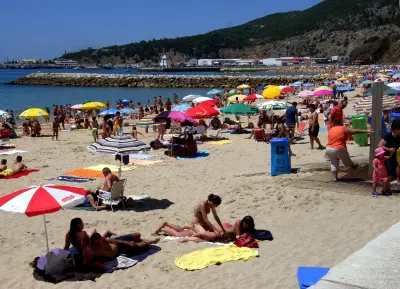
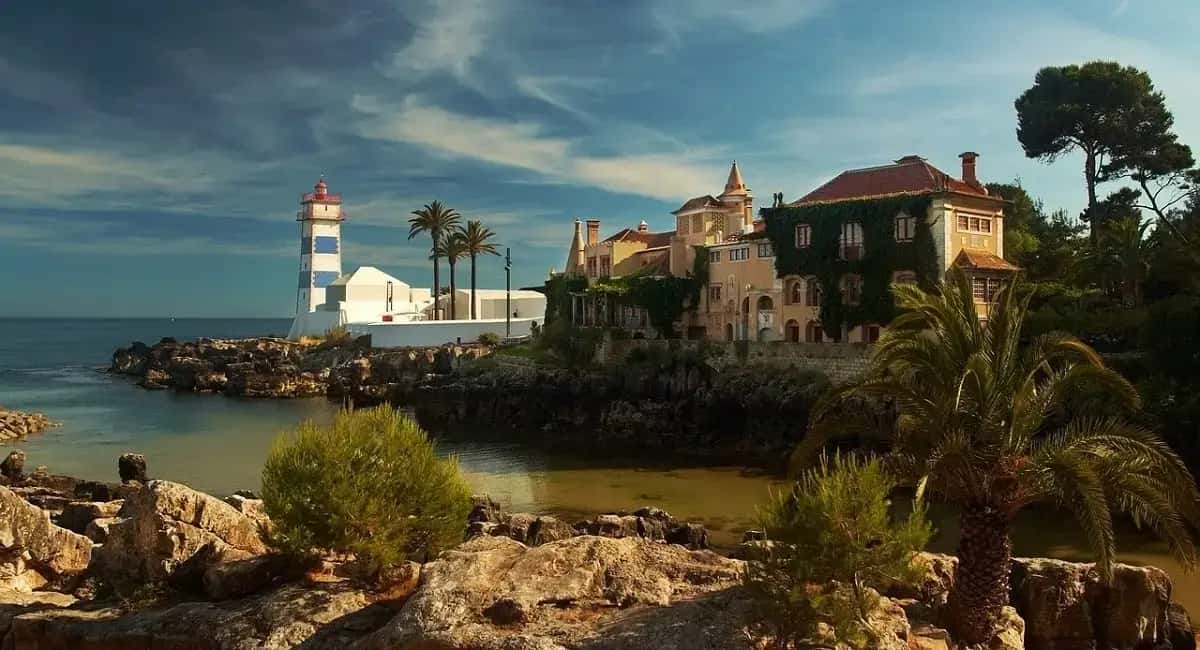
Cascais was a quiet fishing port until 1870, when the Portuguese royal family chose it as a summer residence. Within a decade the town transformed: aristocratic mansions, beachfront promenades, the Casino Estoril nearby, and a genteel atmosphere that survives today. The historic centre is compact, walkable and immediately charming — cobbled streets, white-and-blue buildings, small squares opening onto the bay, and a fishing harbour that still brings in fresh catch each morning. The seafront promenade extends for several kilometres along sandy beaches, connecting Cascais to neighbouring Estoril.
Beyond the obvious appeal of beaches and old-town wandering, Cascais offers more substantial draws. The Boca do Inferno, a dramatic cliff formation where Atlantic swells crash into a hollowed-out chasm, sits just west of town. The Paula Rego House of Stories museum showcases one of Portugal's most important contemporary artists. A short drive or bike ride leads to Guincho Beach, popular with surfers and windsurfers. The town serves as a natural base for exploring the Sintra-Cascais Natural Park, a protected coastal landscape that includes the westernmost point of mainland Europe at Cabo da Roca.
For visitors with limited time in Portugal, Cascais offers a particular kind of value: it provides genuine seaside Portugal — Atlantic, breezy, sun-bleached — without requiring the multi-hour drive south to the Algarve. Many travellers spend the bulk of their stay in central Lisbon and treat Cascais as a single day trip, an arrangement that the rail line makes especially convenient. Others base themselves in Cascais for several nights and treat Lisbon as the day-trip destination. Both patterns work, and the airport-to-Cascais transport question matters in either case.
The Train Route via Cais do Sodré: The Classic Approach
The single most popular way of reaching Cascais from anywhere in greater Lisbon is the Cascais Line train, which runs from Cais do Sodré station in central Lisbon along the river and coast all the way to Cascais. The journey itself is a pleasure: the train hugs the water, passing Belém, the bridge, Estoril, and a string of beaches before pulling into Cascais station, which sits a two-minute walk from the historic centre. End-to-end the trip takes around forty minutes, and trains run frequently throughout the day.
The Cascais Line is operated by CP (Comboios de Portugal) and is treated as a suburban service. Tickets are inexpensive — currently around €2.40 one way, paid via a rechargeable Viva Viagem card that you can buy at any station ticket machine for a small initial cost. The same card works on the Lisbon Metro, Carris buses and trams, and the Cascais train, making it a practical purchase for any visitor. Trains run from roughly 5:30 in the morning until just past 1:30 at night, with frequencies of around fifteen to twenty minutes during the day and longer gaps in the early morning and late evening.
The trains themselves are double-decker electric multiple units with reasonably comfortable seating and luggage space, though they can fill up at peak commuter times — early morning and around 18:00 to 19:00 on weekdays, when locals are travelling between work in central Lisbon and homes along the coast. Outside these windows the trains rarely feel crowded, and the seats on the seaward side offer a steady view of beaches and ocean throughout the journey. For the best photographs, sit on the right side travelling toward Cascais and on the left returning to Lisbon.
The catch with the train route is that it begins in central Lisbon, not at the airport. You first need to get yourself from the airport to Cais do Sodré station — and this is where the multi-stage nature of the airport-to-Cascais journey becomes apparent. Several options work, with different time and cost profiles, and the right one for you depends on how much luggage you have, what time you are travelling, and how much you value speed versus saving money.
Getting to Cais do Sodré from the Airport: Metro Route
The cheapest and often fastest way to reach Cais do Sodré from Lisbon Airport is via the Metro. The airport has its own dedicated Metro station — the terminus of the Red Line (Linha Vermelha), located adjacent to Terminal 1. From the airport, you ride the Red Line for around twenty-five minutes to São Sebastião, where you transfer to the Blue Line (Linha Azul), which takes you directly to Cais do Sodré in a further fifteen minutes or so. Including the transfer, total travel time is typically forty to fifty minutes.
The Metro fare is currently €1.90 per single journey on the Viva Viagem card, plus the small initial cost of the card itself. This works out as one of the most economical ways to make any inter-city movement in greater Lisbon. The full chain of airport-Metro-train to Cascais ends up costing well under €5 in tickets, comparing very favourably with private transport. For more details on the Metro itself, including a complete description of the Red Line, see our Lisbon Airport Metro guide.
The Metro option works well for travellers with manageable luggage, no time pressure, and a willingness to navigate a transfer with bags. Metro stations have escalators and lifts, but they are not always conveniently positioned, and the platforms can become crowded at peak times. If you are travelling with two or more large suitcases, or with small children plus luggage, the Metro and train combination becomes more demanding. For solo travellers or couples with carry-on bags, it is genuinely the most efficient option, particularly if you are not in a rush.
One specific consideration: the Cais do Sodré Metro station and the Cais do Sodré train station are connected through an underground passage. You do not need to leave the building or cross any streets — once you are off the Metro, follow signs to "Comboios" (trains) and you arrive directly at the train ticket hall. This makes the transfer between the airport Metro arrival and the Cascais train departure unusually smooth.
Taxi from the Airport to Cascais
For travellers willing to spend more for a direct, single-vehicle journey, a taxi from the airport runs all the way to Cascais without any transfers. The trip takes around thirty to forty-five minutes depending on traffic and time of day, longer during weekday rush hours when the A5 motorway becomes congested. Expect to pay roughly €40 to €55 for the ride, including the airport surcharge and a small luggage fee.
Lisbon's official airport taxis are cream-coloured and operate on a metered basis. They are licensed and reliable, with fixed metering rules, and you can simply join the queue at the taxi rank outside arrivals. Drivers are required to use the meter on all journeys; insist on this if a driver suggests a fixed price, as a metered fare is almost always lower for the airport-to-Cascais run. Tell the driver "Cascais centro" or specify your hotel address — the route is straightforward and they will take you directly via the A5 motorway.
Taxis make particular sense for travellers arriving late at night or very early in the morning, when Metro and train services may not be running or have reduced frequencies. A taxi is also a practical choice for groups of three or four sharing the cost, or for anyone with multiple large bags that would be cumbersome on public transport. For a complete breakdown of taxi practices at the airport including ranks, fares to other destinations, and avoiding unofficial taxis, see Lisbon Airport Taxis.
The downside of taxis, beyond the cost, is traffic. The A5 motorway between Lisbon and Cascais experiences heavy congestion at peak commuting hours, particularly heading west on weekday afternoons and evenings. A journey that takes forty minutes at midday can stretch to an hour and a half during the worst evening traffic. The train, by contrast, runs on its own protected right of way along the river and coast, and is unaffected by road conditions. If your travel time falls within rush hour, the train is often genuinely faster as well as cheaper.
Uber, Bolt and Free Now: Ride-Hailing Options
Lisbon has a thriving ride-hailing market, with Uber, Bolt and Free Now all operating extensively at the airport and across the metropolitan area. For the airport-to-Cascais run, ride-hailing is generally cheaper than a metered taxi by perhaps twenty to thirty percent, with quoted fares typically falling in the €30 to €45 range depending on time of day, surge pricing, and the specific service tier you choose.
To use these services from the airport, install the relevant app before you arrive (Lisbon WiFi at the airport works fine for this if you have not done it earlier), enter Cascais as your destination, and request the ride. The app will direct you to a designated ride-hailing pickup zone, separate from the official taxi rank — at Lisbon Airport this is currently in the parking structure on the floor above arrivals at Terminal 1. Follow the signs for "TVDE" or "VTC" pickup. The walk takes a few minutes from arrivals, including elevator or stairs.
Ride-hailing is particularly good value for solo travellers and pairs, where the fare is divided across fewer people. For a group of four, the cost difference between Uber and a regular taxi narrows. The benefit of ride-hailing over a taxi lies less in price than in convenience: the fare is settled in advance through the app with no negotiation, you have a record of the trip, you can pay by card without involving the driver in payment processing, and the driver is rated and tracked. For travellers who prefer a low-friction experience, this is often worth the small inconvenience of finding the pickup zone.
One thing to be aware of is surge pricing. When demand at the airport spikes — late evenings, holiday weekends, when several international flights arrive close together — Uber and Bolt prices can climb significantly. If your initial quote seems unusually high, wait fifteen to twenty minutes and re-check, or compare with the metered taxi rate, which does not surge in the same way.
Private Transfer Services: Pre-Booked Door-to-Door
Several private transfer companies operate in Lisbon, offering pre-booked door-to-door service from the airport to anywhere in greater Lisbon, including Cascais. The model is straightforward: you book online before your trip, providing flight details, the destination address, and the number of passengers and bags; the company assigns a driver who waits at arrivals with a name sign and takes you directly to your destination. Prices for the airport-to-Cascais journey typically run €45 to €80 depending on vehicle type, with sedans at the lower end and minivans for groups of five or more at the higher end.
Private transfers offer several advantages over taxis or ride-hailing for specific traveller types. The driver waits inside arrivals — useful when you are tired after a long flight, navigating with children, or unfamiliar with the airport. The price is fixed at booking, with no risk of surge pricing or meter-running. Drivers are typically more accommodating than airport taxi drivers; many speak English, can suggest stops, and treat the journey as a service rather than a transaction. Bags are loaded for you. For families, business travellers, and anyone with mobility constraints, the additional cost is often justified.
The trade-off is cost. A private transfer to Cascais costs roughly twice what an Uber would, three times what a taxi would, and ten times what the Metro-plus-train combination costs. Whether this is worth it depends on your priorities — for a one-time arrival after a long flight, with luggage and tired family members in tow, many travellers find the smoother experience well worth the difference. For repeat trips or budget-conscious travellers, the savings of public transport are substantial. See our Lisbon Airport Transfers guide for a comprehensive comparison of all transfer types.
If you are travelling with a large group — say six adults or a family of seven with luggage — a private minibus transfer becomes genuinely competitive with several taxis or two ride-hailing vehicles, while keeping the group together. This pattern works particularly well for wedding parties, group holidays, or business teams arriving together.
Driving Yourself: Renting a Car at the Airport
Renting a car at Lisbon Airport and driving directly to Cascais is a straightforward option if you plan to use the car beyond the initial transfer. The drive takes around thirty-five minutes via the A25 ring road and the A5 motorway, both of which are well-signposted and easy to navigate even for first-time visitors. Tolls on the A5 are modest, and parking in Cascais is generally available, with metered street parking and several covered car parks near the centre.
The major international rental companies — Hertz, Avis, Europcar, Sixt, Enterprise, Goldcar, Centauro and others — all operate at Lisbon Airport, with rental desks in the terminal and pickup at the rental car centre a short shuttle ride away. Rates are competitive, with small economy cars typically running €25 to €45 per day depending on season and lead time, plus insurance and fuel. For more detailed information on the rental process, what to expect, and tips for avoiding common upsell pitfalls, see Lisbon Car Rental.
Renting a car makes most sense if you plan to explore beyond Cascais — the wider Sintra-Cascais Natural Park, day trips along the Atlantic coast, the wine region around Setúbal, or destinations south of Lisbon that are more difficult to reach by public transport. If your stay is purely in Cascais and central Lisbon, a car becomes a liability rather than an asset: parking is restricted in central Lisbon, the public transport is excellent, and you spend more time managing the vehicle than enjoying it.
One specific consideration for travellers from outside the European Union: an International Driving Permit may be required, depending on your country of license. Most rental companies will accept a US, Canadian, or Australian license alone, but Portuguese police occasionally request the IDP at routine stops. Obtaining one before you travel is inexpensive and avoids any complications.
Bus Options: Less Common But Possible
Public buses connect the airport to central Lisbon and onward to suburban areas, though for the specific airport-to-Cascais journey they are rarely the best choice. Carris buses 783 and 744 (the regular airport bus lines) runs between the airport and central destinations including Marquês de Pombal, Restauradores, and Cais do Sodré, offering an alternative to the Metro for reaching the Cascais train.
For travellers with substantial luggage who find the Metro stairs and transfers difficult, Carris bus 783 can be more comfortable than the Metro: large luggage compartments, fewer transfers, and a single seat for the duration. The trade-off is that you are subject to road traffic, which can extend the journey time considerably during rush hours. Outside peak times Carris bus 783 is a reasonable middle ground between the cheapest Metro option and a taxi.
Direct buses from the airport to Cascais do not operate as a regular service. Some long-distance coach companies serve Cascais from central Lisbon's Sete Rios bus terminal, but reaching Sete Rios from the airport itself adds another transfer and rarely makes practical sense. For travellers committed to the bus mode, Carris bus 783 to Cais do Sodré followed by the Cascais train remains the cleanest combination, though most visitors find that the Metro version of the same journey is faster and cheaper.
One bus option worth knowing about: from Cascais itself, the SCOTTURB bus network connects to Sintra, the Natural Park, Cabo da Roca and other destinations. This is unrelated to the airport transfer but useful once you have arrived in Cascais and want to explore the surrounding region without a car.
Comparing Costs and Times: Which Option Wins?
Putting all the options side by side reveals clear patterns. The Metro-plus-train combination costs around €4.25 in fares, takes 70 to 90 minutes door to door including transfers and waits, and works for travellers with normal luggage and no major time pressure. A taxi runs €40-55 for the direct journey, taking 35-60 minutes depending on traffic. Uber or Bolt costs €30-45 for similar timing. Private transfers run €45-80 for door-to-door service with luggage assistance.
The fastest option in light traffic is a private vehicle — taxi, Uber, or transfer — running directly via the A5 in around thirty-five minutes. The fastest option in heavy traffic is the train, which is unaffected by road congestion. During weekday afternoon rush hours (roughly 17:00 to 19:30), road journeys to Cascais can take ninety minutes or more, while the train holds steady at forty minutes from Cais do Sodré. This timing comparison matters: if you are landing during the afternoon rush, the public transport route may genuinely be faster despite the transfers.
The cheapest option remains public transport, by a significant margin. For solo travellers and couples, Metro-plus-train at under €5 per person is hard to beat. For groups of three or four, however, sharing a taxi or ride-hailing becomes economically competitive — €40 split four ways is €10 per person, only modestly more than public transport while saving the time and effort of transfers. For larger groups, private transfers in a minibus often work out cheapest per person while keeping everyone together.
The most comfortable option depends on definition. For pure travel comfort, a private transfer with a waiting driver, fixed price, and door-to-door service is hard to match. For experiential travel, the Cascais Line train along the river and ocean is one of the most pleasant suburban rail journeys in Europe, and many travellers consider the train ride itself part of the trip's appeal rather than a means of getting somewhere.
What to See in Cascais: A Brief Guide
Once you arrive in Cascais, the historic centre is your starting point. Within a five-minute walk of the train station you reach the bay-front squares, the marina, and the cluster of restaurants and bars that line the seafront. The old town's cobbled streets wind inland from the bay through several blocks, with churches, small shops and family-run cafés. Praia da Ribeira, the small beach in the centre of town, is where you will see fishermen unloading the morning catch and where evening sunsets draw locals and visitors alike.
The promenade walk westward from town leads to the Marechal Carmona Park, the Cascais Cultural Centre (a former royal residence), and the Boca do Inferno cliffs about a kilometre out. Continue further west and you reach Praia do Guincho, a wilder Atlantic beach popular with surfers and windsurfers and known for its dramatic dune landscape. Inland from the beach is the Sintra-Cascais Natural Park, a protected coastal area that includes the cliffs at Cabo da Roca, mainland Europe's westernmost point, about thirty minutes' drive from Cascais centre.
For families, the Casa das Histórias Paula Rego (a museum dedicated to one of Portugal's most important contemporary artists) and the Museu do Mar (Sea Museum) provide indoor cultural alternatives to the beach. The marina hosts boat tours along the coast, including trips to see the cliffs and dolphin-watching excursions. The Estoril Casino, just one stop east on the train line, is one of the largest in Europe and a relic of mid-twentieth-century glamour, with a small museum dedicated to Ian Fleming, who reportedly drew on Estoril for the setting of Casino Royale.
Cascais lends itself well to slow, unstructured visits — wander, eat a long lunch overlooking the bay, swim, walk the promenade. For travellers with a single day, a typical itinerary is morning beach time, lunch in the old town, afternoon at the cliffs or the museum, and a return train to Lisbon in the evening. Travellers with several days can use Cascais as a base for excursions to Sintra, Cabo da Roca, and the broader Natural Park.
Day Trip Versus Overnight Stay
Whether to make Cascais a day trip from Lisbon or stay overnight (or longer) depends on the rhythm of your overall trip. Day trips are easy and popular: with the train running late into the evening, you can leave Lisbon at nine in the morning, spend the full day in Cascais, and return after a sunset dinner without any time pressure. This pattern works well for travellers based in central Lisbon who want a taste of the coast without changing accommodations.
Staying overnight changes the experience. Cascais empties of day visitors after sunset, leaving the old town to overnight guests and locals — the dinner restaurants are quieter, the seafront more peaceful, and the morning beaches uncrowded. Hotel options range from large historic resorts (the Albatroz, the Cidadela, the Pousada Cidadela built into a sixteenth-century fortress) to smaller boutique properties and beachfront apartments. Prices in summer can match central Lisbon rates; in shoulder seasons, Cascais is often noticeably more affordable than central Lisbon for similar quality.
For longer Portugal trips, three or four nights in Cascais provide a different kind of base than central Lisbon: more relaxed, more obviously beach-and-ocean focused, with day trips to Sintra and Lisbon city centre available by train. Many travellers split their stay — a few nights in central Lisbon, a few nights in Cascais — to get both the urban and coastal experience without commuting daily between them. This split-stay approach is particularly common for honeymoons and longer leisure visits.
If you are arriving on a tight schedule and have other Portugal stops planned (Porto, the Algarve, the Douro), Cascais as a day trip from Lisbon often provides enough — you see the highlights and continue to your next destination without an extra hotel transition. For a one-week Portugal trip with Lisbon as the only base, the day-trip approach is generally sufficient.
Returning to the Airport from Cascais
The return journey from Cascais to the airport mirrors the arrival options, but with a few specific considerations. The train back to Cais do Sodré runs frequently throughout the day; from Cais do Sodré you transfer to the Metro Blue Line to São Sebastião and the Red Line to the airport, taking around an hour and a quarter end to end including transfers. Plan to leave Cascais at least three hours before your flight for international departures, longer if you are travelling at peak times or with significant luggage.
For departures, the train timing matters. The Cascais Line first train of the morning leaves Cascais around 5:30; if you have a 7:00 flight, this gives you only a tight ninety minutes to reach the airport, which is usually not enough for international check-in. For early-morning flights, plan to take a taxi or pre-booked transfer rather than relying on the first train. Conversely, for evening flights, the train runs until past midnight, providing ample buffer for late departures.
Pre-booking a return transfer from Cascais to the airport is straightforward through the same private transfer companies that operate inbound. Pickup is at your hotel or at a designated meeting point, and the journey takes around forty minutes via the A5 — though the A5 in the morning rush hour heading east toward Lisbon can be congested, so add a buffer for weekday morning departures. A taxi can also be ordered through your hotel, with similar timing and slightly lower cost than a pre-booked private transfer.
For travellers continuing onward to other Portuguese destinations rather than back to the airport, the train connections at Cais do Sodré and from there to Oriente or Santa Apolónia stations open up most of the country. Direct trains from Lisbon to Porto, the Algarve, Évora, and the Spanish border are easy to reach via this route. See our Transportation from Lisbon Airport to Train Station guide for the full picture of national rail connections.
Common Pitfalls and How to Avoid Them
Several mistakes recur often enough among visitors making the airport-to-Cascais journey that they are worth flagging directly. The first is buying the wrong ticket or no ticket. The Cascais Line uses the Viva Viagem rechargeable card, which you must purchase from a ticket machine at any station before boarding. Buying a paper ticket from the platform machines is also possible but slightly more expensive per journey. Boarding without any valid ticket can result in a substantial on-the-spot fine if a ticket inspector boards the train.
A second pitfall is the wrong direction at Cais do Sodré. The Metro Blue Line at Cais do Sodré is a terminus, so this is straightforward. But on the return journey, when boarding the Metro at Cais do Sodré, ensure you are travelling toward São Sebastião (the direction is signed); the wrong direction will take you to the other end of the line and cost you fifteen minutes recovering. Similarly, when boarding the Cascais train at Cais do Sodré, all trains go to Cascais — but check the destination on the front of the train, as some terminate at Estoril or other intermediate stations during off-peak periods.
A third common mistake is underestimating luggage handling. The Metro stations at the airport, São Sebastião, and Cais do Sodré have escalators and lifts but they are not always conveniently positioned, and some transfers involve stairs. If you have two large suitcases plus a carry-on, the Metro option becomes considerably more challenging than it sounds on paper. Travellers with significant luggage often find that paying for a taxi or ride-hailing service for the airport leg, then using the train for subsequent excursions, is the more practical compromise.
A fourth issue is the timing of the last train. If you are returning from Cascais late in the evening, check the actual schedule for the night you are travelling — the last departure from Cascais is typically just past 1:30 but varies seasonally and on holidays. Missing the last train means a taxi back to central Lisbon, which costs more than the entire round-trip train fare. The Cascais train app, the CP website, and the platform displays all show real-time schedules.
Practical Tips for the Journey
Several small practical points improve the journey for first-time visitors. Buy a Viva Viagem card at the airport Metro station as soon as you arrive: you can use it for the airport Metro, the Cascais train, future Metro journeys in Lisbon, Carris buses and trams, and Carris bus 783. Loading €10 to €15 onto the card initially covers most of a multi-day visit's transport needs. The card itself costs €0.50 and is rechargeable indefinitely.
Sit on the right side of the train heading from Lisbon to Cascais for the best ocean views. The journey from Cais do Sodré curves along the Tagus estuary before opening out to the Atlantic at the Bugio lighthouse, and the seaward side of the train provides continuous views of the river, beaches, and the bridge. On the return journey, sit on the left for the same effect.
For travellers with luggage, the train has dedicated luggage areas at the ends of each carriage, but these fill up at peak times. If possible, board at a quieter end of the platform to find space; if the luggage area is full, suitcases can rest at your feet between rows of seats, though this is less than ideal for a forty-minute journey. The double-decker carriages have stairs to upper-level seating, which is impractical with bags.
Cascais train station is a two-minute walk from the historic centre and the bay. Most hotels in central Cascais are within ten minutes' walk; for stays at hotels further out (Estoril, Guincho, the resort hotels), a short taxi from the station typically costs €5 to €10. Many hotels offer pickup from the train station with advance notice. Heading further on, see our broader how to get from Lisbon Airport to city center guide for variations on the central Lisbon transfer.
Choosing the Right Option for Your Situation
To summarise the decision logic: if you are a solo traveller or couple with carry-on luggage and no major time pressure, the Metro-plus-train combination is the best value at around €4.25 per person, taking 70 to 90 minutes. If you are travelling with three or more in a group, splitting a taxi or ride-hailing service becomes cost-competitive and saves the transfer hassle. If you value door-to-door comfort or have specific needs (mobility, very late or early flight, tired children), pre-booked private transfer is often worth the additional cost.
For first-time visitors who plan to explore the wider region by car, renting at the airport and driving directly to Cascais makes sense, with the car available for subsequent day trips to Sintra and the Natural Park. For visitors planning to use central Lisbon as a primary base with Cascais as one of several day trips, public transport for the entire stay is generally more convenient than dealing with a car in the city.
Whatever option you choose, the actual experience of arriving in Cascais — the colour, the bay, the small fishing harbour, the quiet old streets — is the reward. The transport question is solvable in any of several ways, and none of them ruins the trip. The most common error is over-thinking the choice; for most travellers, the Metro-and-train combination is genuinely fine, the train ride is pleasant, and the small adventure of the transfer becomes part of the trip's texture rather than a problem to be optimised away.
Cascais has been welcoming visitors from Lisbon for a hundred and fifty years, and the rail line that connects them is a piece of that history still in daily use. Riding it from the central station along the river to the coast is one of those small travel pleasures that is hard to plan for and easy to enjoy. Whatever route you take from the airport to get there, the destination is well worth the journey.
Planning a Cascais trip? Reach out
You May Also Like
- Lisbon Airport Metro
- Transportation from Lisbon Airport to Train Station
- How to Get from Lisbon Airport to City Center
- Lisbon Car Rental
Update (2023): The Aerobus shuttle service (formerly aerobus.pt) was discontinued. Carris urban bus lines 783, 728, 744 and 24-hour night line 208 now provide all public airport–city connections at €2.30 per ride.