Lisbon Travel Guide — Everything You Need to Know About Portugal's Capital

Lisbon is one of Europe's most distinctive capitals — a city of seven hills sloping down to the Tagus river, of azulejo-tiled facades and yellow trams, of melancholy fado music and bright morning light unique to the Atlantic edge of the continent. For travelers arriving at Lisbon Airport (LIS), the city is unusually accessible: only 7 kilometers north of the historic center, connected by Metro, bus, and taxi in 15 to 30 minutes. Whether you're stopping over on a long-haul transit, visiting for a weekend, or making Lisbon a base for exploring Portugal, the city rewards travelers who arrive prepared.

This guide brings together the practical information visitors actually need: how to get from the airport into the city, where to stay, what to see, what to eat, and what side trips to consider. It is written for travelers transiting through Humberto Delgado Airport, so the focus is on the connections between airport, city, and the wider Portuguese region — but the destination information here applies equally to anyone planning a Lisbon visit by any route.

Portugal's capital is one of the oldest cities in Western Europe — older than Rome, predating Paris and London by centuries — and that depth of history is layered into nearly every neighborhood. At the same time, Lisbon has spent the last two decades becoming one of Europe's most dynamic capitals: a tech hub, a digital nomad magnet, a destination for travelers seeking a city that feels both authentic and alive. Understanding both layers — the ancient city and the contemporary one — makes a Lisbon visit substantially more rewarding.

Welcome to Lisbon — An Overview of the City

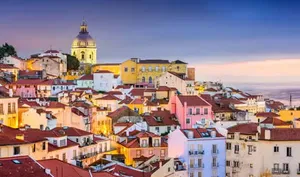
Lisbon sits at the mouth of the River Tagus on Portugal's western coast, where the river widens dramatically into a broad estuary before reaching the Atlantic. The city's geography is defined by this position — it is both a port city and a riverside city, with hills that fall toward the water and viewpoints (miradouros) at nearly every elevation that look out over rooftops, the river, and the bridges crossing it. The 25 de Abril Bridge, often compared to San Francisco's Golden Gate, dominates the south-western skyline.

Greater Lisbon is home to roughly 2.9 million people across its metropolitan area, with about 545,000 in the city proper. Despite its capital status, Lisbon retains a remarkably human scale — most central neighborhoods can be walked end-to-end in 30 to 45 minutes, and the historic core is compact enough to explore on foot over a weekend. The city's hills make this exploration physically demanding in places, but the views and atmospheric streets make the climbs worthwhile.

Lisbon's relationship to the rest of Portugal is hub-and-spoke: most domestic and international flights route through Humberto Delgado, most rail lines converge in the city, and most major Portuguese cultural institutions are concentrated here. Travelers who use Lisbon as a base for exploring Portugal find that day trips to Sintra, Cascais, Évora, or Setúbal are all easy. For those continuing to Porto, Coimbra, or the Algarve, the rail and air connections from Lisbon make these onward journeys straightforward.

Quick Facts: Population, History, Climate, Language

Lisbon's history begins long before historical records begin to be reliable. Phoenicians traded here, Romans established a settlement called Olisipo, Visigoths and Moors held the city through the early medieval period, and the Christian reconquest in 1147 made Lisbon a Portuguese city. From the 15th to the 17th century, Lisbon was one of Europe's wealthiest capitals, the gateway to a global maritime empire stretching from Brazil to India to Macau. The catastrophic earthquake and tsunami of 1755 destroyed much of the medieval city and shaped the orderly downtown grid (the Baixa) you walk through today.

The climate is one of Lisbon's quiet advantages. Sitting on the Atlantic at 38°N latitude, the city enjoys mild winters (average January high around 15°C / 59°F) and warm but rarely scorching summers (average August high around 28°C / 82°F). Rainfall concentrates between October and April; summers are dry and bright. The light, particularly in late afternoon, is exceptional — photographers and painters have remarked on it for centuries. Spring and autumn are the most pleasant times to visit, with comfortable temperatures and lower tourist density than peak summer.

The language is Portuguese — specifically European Portuguese, which sounds quite different from the Brazilian variety more commonly heard internationally. English is widely spoken in tourist areas, hotels, and most restaurants in the central districts, particularly among younger Portuguese. A few words of Portuguese (obrigado/a — thank you; bom dia — good morning; por favor — please) are appreciated. Spanish is generally understood but Portuguese-speakers prefer to be addressed in English rather than Spanish, given complicated linguistic and historical relationships between the two languages.

When to Visit — Seasonal Considerations?

Each season in Lisbon has its character, and the right time to visit depends on your priorities. Spring (March through May) is often the ideal window: temperatures are pleasant (15–22°C / 59–72°F), the city's famous jacaranda trees bloom in May filling avenues with purple flowers, and tourist crowds have not yet reached peak summer levels. Hotel prices are also more reasonable than in summer.

Summer (June through September) is high season — warm to hot, dry, and crowded. June and September tend to be the most comfortable months in this range; July and August can be uncomfortably hot for sustained walking, particularly on the steep hills. The advantage of summer is that days are long, outdoor dining is at its best, and the Atlantic beaches around Cascais and Costa da Caparica become genuinely usable. The disadvantage is that Lisbon's narrow medieval streets become crowded with tour groups, and accommodation prices peak.

Autumn (October through November) is another excellent window. Temperatures remain mild (15–22°C in October, cooling through November), the light becomes particularly beautiful, and the city's tourist density drops considerably. Restaurants and cafes that were impossible to get into during summer become accessible. Some rain begins in late October but it is rarely sustained.

Winter (December through February) is mild by European standards but can be wet. December has Christmas decorations and a cozy atmosphere, with manageable rainfall. January and February can have stretches of cold, gray, rainy days that are less rewarding for outdoor exploration, though the city's many museums, restaurants, and indoor attractions remain compelling. Winter is when prices are lowest and tourist density is at its minimum.

Getting from LIS Airport to Your Hotel

Humberto Delgado Airport sits unusually close to central Lisbon — about 7 kilometers north of the city center, accessible by multiple transport modes that suit different budgets and travel styles. The most popular options are the Metro, Carris bus 783, taxis, and ride-hailing services like Uber and Bolt.

The Metro is the cheapest option (around €1.65 with the necessary Viva Viagem card, which costs €0.50 for the card itself). The Red Line connects the airport directly to São Sebastião and Alameda stations, with transfers available there to other Metro lines reaching essentially every central neighborhood. The journey to São Sebastião takes about 20 minutes; reaching the historic Baixa via a transfer at Alameda takes about 30 minutes. Trains run from approximately 6:30 AM to 1:00 AM. The Metro is well-suited to travelers with manageable luggage; navigating with very large suitcases is possible but less comfortable.

Taxis from LIS are reliable and use the meter. Expect to pay €15–€25 to most central destinations, depending on traffic and exact location. There are official taxi ranks just outside the arrivals terminal; avoid unofficial drivers who approach inside the terminal. Uber and Bolt are widely available and often slightly cheaper than taxis, with the convenience of pre-set fares and app-based payment. For travelers with multiple bags, families, or those arriving late at night when Metro service is reduced, taxis or rideshares are typically the best option.

It is slower than the Metro for most destinations but has the advantage of accommodating luggage easily and dropping passengers in central tourist areas without transfers.

For the full breakdown of options, costs, and routing, see getting from Lisbon airport to city center for our complete guide. Travelers with onward connections to other cities or to Cascais will find transportation to Cascais and transportation to the train station useful as well.

Where to Stay — Lisbon's Central Neighborhoods?

Lisbon's neighborhoods each have a distinct character, and choosing the right one shapes the texture of your stay. The historic core breaks down into roughly half a dozen districts that travelers should know about.

Baixa is the downtown grid rebuilt after the 1755 earthquake — flat, walkable, with major squares (Praça do Comércio, Praça do Rossio, Praça da Figueira), the central shopping streets, the elevators that connect to higher neighborhoods, and many of the city's mid-range hotels. It's a practical base for first-time visitors because it puts you within walking distance of most major sights and provides easy access to public transport.

Chiado sits just up the hill from Baixa, mixing literary cafes (A Brasileira, where the poet Fernando Pessoa once drank coffee), upscale shopping, and elegant 19th-century architecture. It feels more sophisticated than Baixa and connects via the Elevador de Santa Justa or short walks to several adjacent neighborhoods. Chiado is excellent for travelers who want a slightly quieter, more refined base while remaining central.

Alfama is the medieval Moorish quarter — narrow stepped streets, white-washed houses, fado restaurants, and the Castle of São Jorge above. Alfama is where Lisbon is at its most atmospheric and historic, but it's also the steepest, noisiest at night (due to fado bars and tourist activity), and least convenient for travelers with mobility limitations or heavy luggage. Many travelers find Alfama is wonderful to visit but challenging to stay in.

Bairro Alto is the bohemian district above Chiado — quiet by day, lively at night with bars and restaurants. Stay here if you want to be in the middle of Lisbon's nightlife; avoid it if you're a light sleeper or prefer mornings. Adjacent Príncipe Real is more residential and has become trendy in recent years, with design shops and quality restaurants in a quieter atmosphere.

Belém is several kilometers west of the center, along the river, home to many of Lisbon's grand monuments (Jerónimos Monastery, Belém Tower, the Padrão dos Descobrimentos, the Berardo Collection of modern art). It's a less central base but works well for travelers who plan to spend significant time in Belém or who prefer a quieter neighborhood with riverside walking.

Travelers seeking maximum convenience for airport access — particularly those with early-morning flights or multiple airport connections — often choose hotels near Lisbon International Airport rather than central Lisbon, especially given how short the airport-to-center journey is.

Top Attractions in Lisbon

Lisbon's attractions divide loosely into the historic monuments concentrated in Belém, the medieval streetscape of central Lisbon, and the cultural institutions and viewpoints scattered across the hills. Most travelers benefit from organizing their visits geographically rather than checking off attractions one by one.

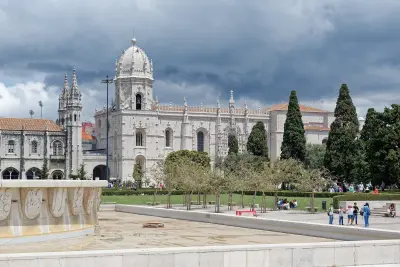
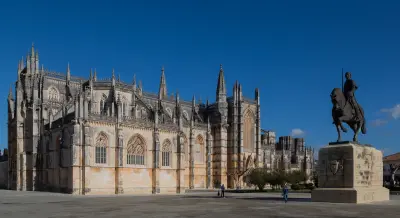
Belém is essential for any first visit. The Jerónimos Monastery (Mosteiro dos Jerónimos), a UNESCO World Heritage site, is one of the most magnificent late Gothic / Manueline buildings in Europe, housing the tomb of Vasco da Gama and richly decorated cloisters. The nearby Belém Tower (Torre de Belém) sits in the river and is the iconic symbol of the Age of Discoveries. Between them, the Padrão dos Descobrimentos commemorates the Portuguese explorers who launched from this riverside in the 15th and 16th centuries. Allow at least half a day for Belém, including time for the famous pastel de nata at Pastéis de Belém.

Castle of São Jorge (Castelo de São Jorge) crowns the hill above Alfama. The Moorish castle has a long history, panoramic views over the city and river, and pleasant gardens with peacocks. It's worth visiting both for the historic content and for the views — particularly toward sunset.

Praça do Comércio is the great riverside square that was the entrance to Lisbon for centuries — when goods and travelers arrived by water, this is where they stepped onto Portuguese ground. The triumphal arch leads into Baixa. Today it hosts cafes, the Lisbon Story Centre interpretive museum, and serves as a transit point.

Tram 28 is more attraction than transport. The wooden, antique-style yellow tram trundles up and down the hills of Lisbon, passing through Baixa, Alfama, and other historic districts. The route is iconic but the trams are crowded and pickpockets are an issue — go early morning if you want a real ride, or simply enjoy seeing the trams pass while you're walking.

Time Out Market (Mercado da Ribeira) at Cais do Sodré gathers some of Lisbon's best food vendors under one roof. It's touristy and busy but the food quality is genuinely high — a useful introduction to Portuguese cuisine in a single accessible venue. Adjacent LX Factory is a creative complex of restaurants, shops, and bookstores in a former industrial space.

Oceanário de Lisboa, in Parque das Nações (the eastern district built around the 1998 Expo), is one of Europe's largest aquariums and is excellent for families and anyone interested in marine biology. The whole Parque das Nações district is worth visiting for its modern architecture, which contrasts sharply with the historic city.

The miradouros — Lisbon's famous viewpoints — are essential. Notable ones include Miradouro de Santa Catarina, Miradouro de São Pedro de Alcântara, Miradouro da Senhora do Monte (the highest), Miradouro das Portas do Sol in Alfama, and the Miradouro de Santa Luzia nearby. Each offers a different angle on the city's geography of hills and water.

Portuguese Food and Dining Culture

Lisbon's food culture is one of the genuine pleasures of a visit. Portuguese cuisine combines Atlantic seafood, Mediterranean influences, and the legacies of the country's colonial reach (spices, peppers, tropical ingredients). It is generally less internationally famous than Spanish or Italian food but rewards exploration enormously.

Bacalhau — salt cod — is the national fish, prepared in dozens of traditional preparations. Bacalhau à brás (shredded with eggs and potatoes), bacalhau com natas (creamy baked), and bacalhau à lagareiro (with olive oil and roasted potatoes) are all classics. The phrase "365 ways to cook bacalhau" is an exaggeration but conveys the centrality of this fish.

Sardines are at their best in summer, particularly during the June Festas dos Santos Populares when grilled sardines (sardinhas assadas) are sold in the streets of Alfama and elsewhere. Fresh, simply grilled, served with bread and salad, they are a defining Lisbon experience.

Pastel de nata — the iconic egg custard tart — deserves the international fame it has acquired. The original recipe comes from Pastéis de Belém in the Belém district, where they are made on-site to a closely guarded recipe and served warm with cinnamon and powdered sugar. Other excellent versions are found at Manteigaria (multiple locations including Time Out Market) and a number of traditional bakeries.

Other essential dishes include caldo verde (kale and chorizo soup), arroz de marisco (seafood rice), polvo à lagareiro (octopus with olive oil), bifana (pork sandwich), and francesinha (Porto's hearty meat sandwich, also found in Lisbon). Cheeses worth seeking out include Serra da Estrela, Azeitão, and queijo de São Jorge from the Azores.

Drinks include vinho verde (the light, slightly sparkling young white wine from the north), Douro reds (full-bodied red wines), port wine (fortified, available in many styles), Madeira wine, and the cherry liqueur ginja (often served in chocolate cups in central Lisbon). Coffee culture is strong — bicas (small espressos) are the standard.

Dining customs: Portuguese eat lunch from about 1:00 to 3:00 PM and dinner from about 8:00 to 10:00 PM (later in summer and on weekends). Restaurant kitchens often close between meals. Couvert (the bread, olives, butter, and small dishes brought to the table at the start) is generally not free — it's optional and you can decline if you don't want it. Tipping 5–10% for good service is appreciated but not strictly required.

Day Trips from Lisbon

Lisbon makes an exceptional base for day trips. The combination of compact distances, frequent public transport, and dramatically different destinations within an hour or two means visitors can experience a remarkable range of Portuguese landscapes and cultures from a single hotel.

Sintra is the most popular and most magical day trip — a UNESCO World Heritage site of fairy-tale palaces, romantic gardens, and dense forests on the cool, often misty hills 30 kilometers northwest of Lisbon. The Pena Palace, the Moorish Castle, the Quinta da Regaleira, and the Monserrate Palace each justify a visit on their own. Trains from Rossio station reach Sintra in about 40 minutes; from there, local buses connect the various sights. Aim to arrive early — Sintra becomes very crowded by midday.

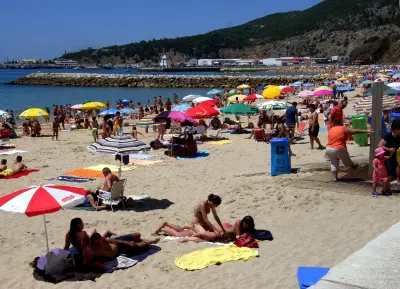
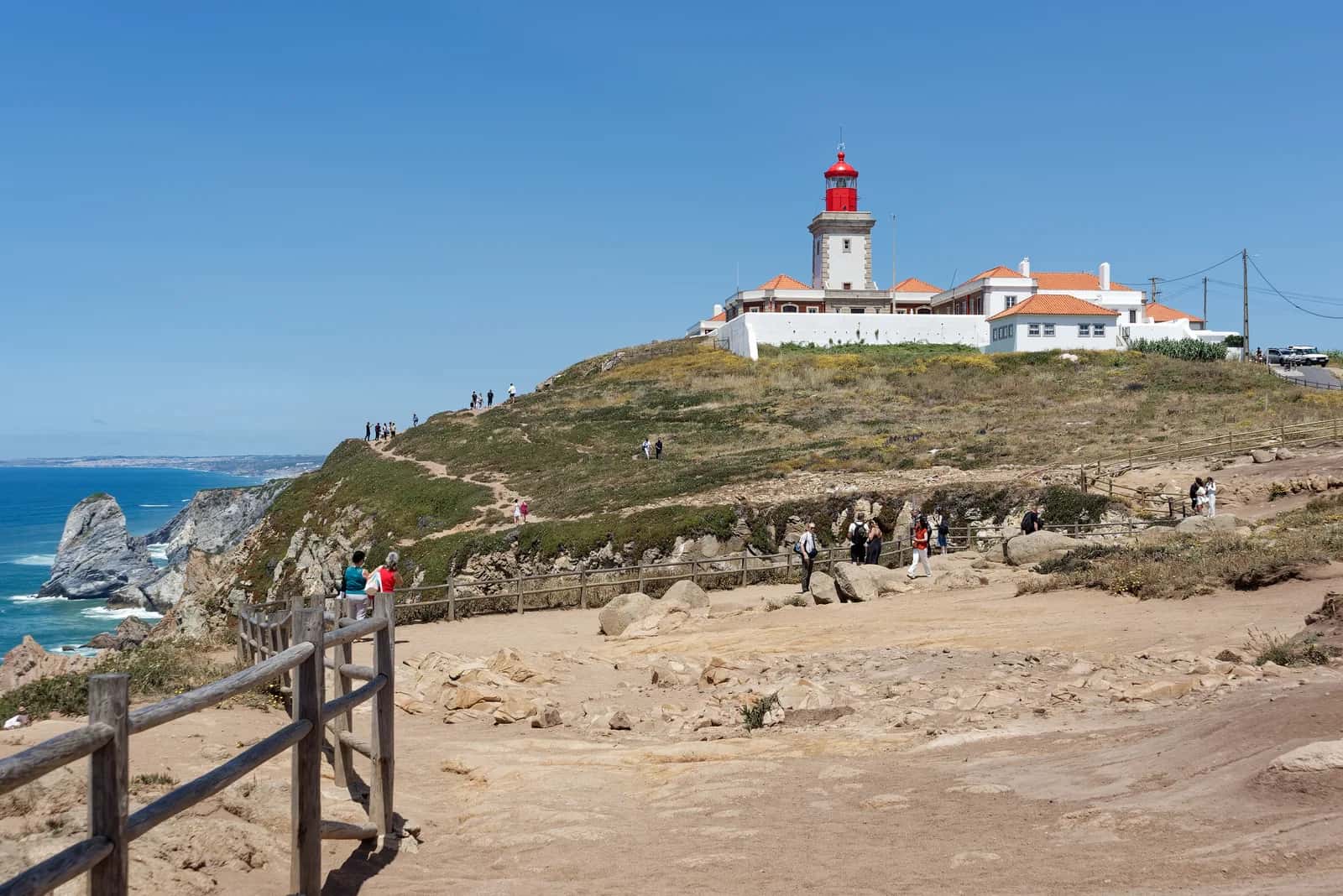
Cascais is the elegant beach town 30 kilometers west of Lisbon, accessible by train from Cais do Sodré in about 40 minutes. Its old fishing village core has become a fashionable destination, with beaches, restaurants, marina, and the dramatic Boca do Inferno cliff formation just outside town. Combined with neighboring Estoril (with its Casino, formerly a setting in James Bond fiction), Cascais makes a relaxed half-day or full-day trip.

Estoril is between Lisbon and Cascais on the same train line. It has wide beaches, the famous Casino Estoril, golf courses, and a slightly more polished atmosphere than Cascais. Travelers often combine the two in a single trip.

Évora is two hours east in the Alentejo region, accessible by train or bus. The medieval walled city is also a UNESCO World Heritage site, with a Roman temple, the macabre Capela dos Ossos (Chapel of Bones), and an atmospheric center perfect for slow exploration. Évora makes a good full-day or overnight trip; the journey shows off the rolling Alentejo landscape of cork oaks and olive groves.

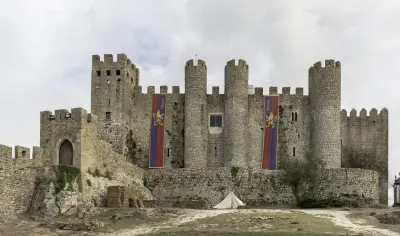
Óbidos is the immaculately preserved medieval village 80 kilometers north of Lisbon. The walled town with cobbled streets, white-washed houses, and bougainvillea-covered walls is genuinely charming. Allow most of a day for the round trip plus exploration; the easiest access is by bus from Lisbon's Campo Grande terminal.

Setúbal and the Arrábida peninsula south of Lisbon offer dramatic coastal scenery, beaches, and good seafood. Setúbal is a working port town with excellent fish restaurants; Arrábida Natural Park has spectacular cliffs and beaches like Portinho da Arrábida. This is more off-the-beaten-path than Sintra or Cascais and rewards travelers seeking something less crowded.

Lisbon for Layover Travelers — What's Possible in 4–8 Hours

Travelers with extended layovers at LIS often have enough time to leave the airport and experience some of central Lisbon. The airport's proximity to the center makes this practical even with relatively short windows, though careful timing is essential.

For a 4-hour layover, leaving the airport is risky but possible if everything runs on schedule. Allow 30 minutes from gate to airport exit, 30 minutes back to airport gate, and 60 minutes for security and boarding — leaving roughly 2 hours in central Lisbon. Realistic itineraries include a quick Metro trip to Marquês de Pombal or Restauradores, a walk through Baixa, lunch at a nearby restaurant, and the return. This is tight; if your inbound flight is delayed at all, you may not have time to leave.

For a 6-hour layover, the equation changes substantially. With about 4 hours in the city, you can comfortably reach Belém by Metro and bus or taxi, see the Jerónimos Monastery and Belém Tower from outside (going inside takes more time and involves queues), have lunch and pastéis de nata, and return. Or you can spend the time in central Lisbon, wandering Baixa, Chiado, and parts of Alfama.

For an 8-hour layover or longer, a more substantial Lisbon visit becomes possible. Core central Lisbon (Baixa, Chiado, Alfama castle) plus a meal can fit comfortably; or a Belém visit with proper time inside the major monuments. Travelers with these longer windows sometimes choose to book a brief hotel stay or use one of the airport-area hotels for showering and resting between flights.

For more detail on what's feasible during different layover durations, see our dedicated guide on layover at Lisbon airport. The key planning step is calculating the actual time you have between cleared customs and the latest you must be back at the airport for your next flight, then subtracting the round-trip transit time. Whatever remains is your window.

Public Transport in Lisbon — Metro, Trams, Buses, Carris

Lisbon's public transport system is operated mainly by Carris (buses and trams) and Metro Lisboa (underground). The integrated Viva Viagem card system covers all of these as well as the Cascais and Sintra commuter lines, the ferries, and Carris bus 783.

The Metro has four lines (Blue, Red, Yellow, Green) connecting most central neighborhoods and the airport. It's fast, reasonably clean, and covers most major destinations. The single trip is around €1.65 with the Viva Viagem card; daily and multi-day passes are also available. Trains run from approximately 6:30 AM to 1:00 AM.

The trams are partly transport, partly attraction. The historic yellow trams (notably Lines 28, 24, and 18) navigate the steep hills that buses cannot manage. These are essential to the Lisbon experience but get extremely crowded during tourist hours; pickpockets work the famous Tram 28 route. Modern trams (E15) cover Belém and the riverside.

The buses reach virtually every part of the city. They are reliable but slower than the Metro for most journeys. Schedules and routes are available through the Carris app, which also handles real-time arrivals and is useful for visitors.

The Cascais and Sintra trains connect to those destinations from Cais do Sodré and Rossio respectively, in about 40 minutes each. These are the easiest day-trip connections.

The elevators — particularly the Elevador de Santa Justa and the funiculars (Lavra, Glória, Bica) — are part of the transport network and covered by the Viva Viagem card. They connect different elevations of the city, saving substantial walking on the steepest sections.

The Viva Viagem card costs €0.50 and is purchased at any Metro station from automated machines or staffed counters. It can be loaded with single trips, day passes (€6.80 for 24 hours of unlimited city transport), or zappy (a stored-value system). For most visitors, the day pass is the most convenient option.

Practical Tips — Money, Language, Safety, Customs

Portugal uses the euro. ATMs (called Multibanco) are widely available, often offering favorable exchange rates compared to currency exchange offices. Most restaurants, hotels, and shops accept major credit and debit cards, including contactless and mobile payments. Cash is still useful for small purchases, taxi tips, and certain traditional places.

The language barrier is generally manageable for English speakers. Younger Portuguese (under 40) typically speak good English, particularly in tourist-facing roles. Older Portuguese may speak French, Spanish, or limited English. Basic Portuguese phrases — bom dia (good day), boa tarde (good afternoon), boa noite (good evening), por favor (please), obrigado/a (thank you), desculpe (excuse me) — are appreciated and often improve interactions noticeably.

Lisbon is generally safe by major European city standards. The main risks are pickpockets in tourist areas (Tram 28, Baixa, the airport, around the major monuments) — keep wallets and phones secure, particularly on crowded transport. Violent crime against tourists is rare. Late-night safety in central districts is generally good, with the bohemian areas (Bairro Alto, Cais do Sodré) lively rather than dangerous.

Tipping is moderate in Portugal — 5–10% in restaurants for good service is appreciated but not strictly required. Round up taxi fares; small tips for hotel staff (€1–€2 per service) are appreciated. Service charges are often not included on bills.

Restaurants generally bring couvert (bread, olives, sometimes other small items) at the start of meals. This is not free and shows on the bill. You can decline it if you don't want to pay; this is normal and not rude.

Plug type is European Type F (the round-pin type with two grounding clips). UK and US travelers will need adapters. Voltage is 230V, 50Hz — most modern electronics handle this without issue but verify your devices.

Lisbon for Business Travelers

Lisbon has become an increasingly important business destination, particularly in technology, fintech, and creative industries. The city hosts Web Summit annually (one of the world's largest technology conferences), and a substantial digital nomad community has grown around its combination of quality of life, reasonable cost relative to other European capitals, and good infrastructure.

Business hotels concentrate around Avenida da Liberdade, Marquês de Pombal, Saldanha, and Parque das Nações (the modern eastern district built for the 1998 Expo). The major international chains all have presence: Four Seasons, Hyatt, Marriott, Hilton, InterContinental, and others. These hotels offer the standard amenities — meeting rooms, gyms, business centers, English-speaking staff — that international business travelers expect.

Public transport accessibility is one of Lisbon's advantages for business travelers. The combination of a compact center, the Metro reaching the airport, and reliable taxis/rideshares means that even tight schedules can be met. Most business meetings can be reached within 30 minutes by transit from major business hotels.

Business meals in Lisbon often run longer than the equivalents in northern European cities — proper lunches can extend to 90 minutes or more, and dinners frequently begin at 8:00 PM and continue past 10:00. Plan accordingly. Dress codes for meetings are similar to those in southern Europe — slightly more formal than Northern European or Scandinavian standards but not strict.

For business travelers staying briefly, Lisbon airport transfers using pre-booked private cars often offer the best balance of reliability and convenience over taxi ranks or rideshares, particularly when arriving with luggage and needing to reach a central hotel before a meeting.

Lisbon for Families

Lisbon is a generally child-friendly city, with good safety, manageable distances in central areas, and a number of attractions that work well for younger visitors. The city's hills can be tiring for small children — strollers struggle on cobbles and steep streets — but the public transport (including trams that children find inherently exciting) helps.

The Oceanário de Lisboa in Parque das Nações is a primary family destination — one of Europe's largest aquariums with extensive interactive exhibits. Allow at least 2-3 hours, and plan for it to be busy during school holidays and weekends.

The Lisbon Zoo (Jardim Zoológico) is well-organized with a substantial range of animals, a children's farm, and shaded picnic areas. It's accessible by Metro (Jardim Zoológico station). The Pavilhão do Conhecimento (Science Pavilion) in Parque das Nações offers interactive science exhibits aimed at children.

Children typically enjoy the tram rides, particularly the historic yellow trams that climb Lisbon's hills. The Castle of São Jorge has peacocks roaming the gardens, ramparts to walk along, and dramatic views. The Belém riverside offers space for children to run, plus the famous pastel de nata as a culinary treat.

Restaurants in Portugal generally welcome children, even at dinner hours that might seem late by some standards. Most restaurants will accommodate child portions on request, and pasta or rice-based dishes are widely available alongside more traditional seafood. High chairs are common but not universal — call ahead for confirmation if it matters.

Beach options for families include the Tagus-side beaches near Cascais and the Costa da Caparica beaches across the river — both within an hour of Lisbon and excellent for warm-weather days. Cascais has shallower, more child-friendly water; Costa da Caparica has Atlantic surf for older children and adults.

Layover and Transit — Making the Most of LIS

For travelers passing through Lisbon on a connection rather than visiting the city, the airport itself has been substantially upgraded in recent years and offers reasonable amenities. Restaurants, shops, and lounges concentrate in the central area of Terminal 1; quieter spots tend to be at the gate ends. The TAP Premium Lounge serves Star Alliance members and TAP premium passengers; pay-per-use lounges are also available.

For shorter connections within the Schengen area or domestic Portuguese flights, the airport's compact size and efficient terminal-to-terminal transit (a free shuttle bus connects T1 and T2) means that minimum connection times are often achievable with some buffer. International long-haul connections may benefit from longer windows, particularly for travelers without lounge access.

For travelers who must wait extended periods at LIS without leaving, the airport has WiFi throughout, plenty of seating in most areas, and basic dining options. It is not a destination airport — there's no significant entertainment or extensive shopping — but it functions adequately for waiting periods of a few hours. Our complete Lisbon airport guide covers the terminal facilities in detail.

Hotels near the airport (a short shuttle ride away) provide an alternative for layovers extending into overnight or longer than 8 hours. Several mid-range and upscale options operate free or low-cost shuttles. For specifics, see hotels near Lisbon International Airport.

Common Questions and Useful Resources

Is Lisbon expensive? Compared to other Western European capitals, Lisbon is generally more affordable — particularly for food, drinks, and public transport. Hotels and tourist-area restaurants in peak season can approach Western European prices, but careful travelers find Lisbon meaningfully cheaper than Paris, London, or Amsterdam. The cost has risen substantially in recent years as tourism and remote-work populations have grown.

Do I need to book attractions in advance? For Sintra's Pena Palace, Belém Tower, Jerónimos Monastery during peak season, and the Oceanário, advance booking is strongly recommended — same-day queues can be lengthy. Most other attractions accept walk-ins.

How long should I stay? A long weekend (3–4 days) covers Lisbon's central highlights with time for one day trip. A full week allows comfortable exploration plus multiple day trips (Sintra, Cascais, Évora). Lisbon as a longer base for exploring central and southern Portugal is also excellent.

Is Lisbon walkable? Central neighborhoods are walkable but hilly. Comfortable walking shoes with grip are essential — cobblestones combined with steep gradients make this not a place for delicate footwear. The trams, funiculars, and elevators ease the most demanding climbs.

What about Wi-Fi and connectivity? Wi-Fi is standard at hotels, restaurants, and cafes, and free at the airport and many public spaces. Portuguese mobile networks (MEO, Vodafone, NOS) provide good coverage; tourist SIM cards are available at the airport and in city centers. EU-area travelers benefit from roam-like-at-home rules.

What time should I plan flights? Lisbon's airport handles departure peaks in early morning (06:00–09:00) for European destinations and evening (18:00–21:00) for transatlantic departures. Arrival peaks tend to be midday. Booking flights at off-peak times can mean faster security and quieter terminals.

Lisbon rewards travelers who arrive prepared but doesn't punish those who arrive curious without much planning. The combination of compact geography, manageable language barrier, and welcoming culture makes it one of Europe's more accessible great cities. For most visitors, a few hours of planning around the practical questions — how to get from the airport, where to base yourself, what to eat — opens up the rest of the experience for spontaneous discovery, which is when Lisbon is at its best.

Planning a trip to Lisbon? Get personalized advice.

You May Also Like

Update (2023): The Aerobus shuttle service (formerly aerobus.pt) was discontinued. Carris urban bus lines 783, 728, 744 and 24-hour night line 208 now provide all public airport–city connections at €2.30 per ride.

Day trip to Sintra recommended? See: Lisbon Airport to Sintra — 5 transport options compared with 2026 prices and scenic Cascais coast route.