Lisbon International Airport (LIS)
Lisbon Airport (LIS): Complete Guide to Humberto Delgado Airport
Humberto Delgado Airport, known internationally by its IATA code LIS and ICAO designation LPPT, is Portugal's largest and most important aviation hub. Located just seven kilometers north of central Lisbon, it serves as the principal gateway to the Portuguese capital and the country at large, handling the vast majority of Portugal's international air traffic and connecting Lisbon to over 150 destinations worldwide. Whether you are arriving for a Portuguese holiday, connecting through to Brazil, the United States, Africa, or simply transiting Europe, understanding how this airport operates will substantially smooth your journey.
This guide is a complete reference to LIS — its layout, terminals, ground transport options, parking facilities, hotel choices, on-site amenities, and the practical details that travelers need before and during their visit. The information is organized so you can read sequentially to build a full understanding, or jump directly to the section addressing your specific question. Internal links throughout will take you to detailed sub-guides on individual topics.
Lisbon Airport handles approximately 33 million passengers annually, hosts more than 50 airlines, and connects to destinations across Europe, Africa, the Americas, and the Middle East. It is the home base of TAP Air Portugal, the country's flag carrier, and a key hub for connections between Europe and Latin America — particularly to Brazil, where Portuguese-speaking ties make Lisbon a natural transit point. Despite its proximity to a dense urban area, the airport is well organized, easily navigable, and supported by modern infrastructure that makes the passenger experience efficient even for first-time visitors.
Overview of Humberto Delgado Airport
The airport was renamed in 2016 in honor of Humberto Delgado, a Portuguese general and democratic politician who opposed the Salazar dictatorship and was assassinated in 1965. Many travelers and locals still refer to it by its older name, Lisboa Portela, after the Portela neighborhood where it is located. The original airport opened in 1942 and has evolved through several major expansions to its current capacity. It remains the only commercial airport directly serving the Lisbon metropolitan area, although a long-discussed second airport at Alcochete is planned for the future.
Today, LIS is operated by ANA Aeroportos de Portugal, the national airport operator now part of the Vinci Airports group. The airport occupies a relatively compact site for its passenger volume, which contributes to both its efficiency and its capacity constraints during peak periods. Two passenger terminals — Terminal 1 (T1) and Terminal 2 (T2) — handle commercial flights, with T1 serving the bulk of operations including all long-haul, all TAP Air Portugal flights, and most full-service carriers, while T2 is dedicated to low-cost airlines and operates separately from the main terminal building.
For travelers, the most useful framing is that Lisbon Airport functions as both a destination airport for visitors to the Portuguese capital and a strategic transfer hub for passengers connecting between continents. If you are visiting Lisbon itself, your priority is understanding ground transport. If you are connecting, your priority is understanding terminal layout and the time required to move between terminals if needed. Both topics are covered in detail throughout this guide. For a more granular walkthrough of the facility, the dedicated Lisbon Airport guide covers operational details that complement what we summarize here.
Key Facts and Statistics
Lisbon Airport consistently ranks among Iberia's top three airports by passenger volume, alongside Madrid Barajas and Barcelona El Prat. In recent years it has handled between 28 and 35 million passengers annually, with steady growth driven by tourism to Portugal, the city's emergence as a digital nomad hub, and TAP's expansion of long-haul connections. International traffic accounts for roughly 90 percent of total volume, with domestic Portuguese flights — primarily to Porto, Faro, Funchal, and Ponta Delgada — making up the remainder.
The airport has two intersecting runways: 03/21, which is the main runway at over 3,800 meters, and 17/35, a shorter crosswind runway. The single primary runway is one of LIS's defining operational characteristics — it limits maximum throughput compared to multi-runway hubs and contributes to occasional delays during peak periods or adverse weather. AENA equivalents in Spain and other major European airports often have more runway capacity, but LIS has invested heavily in optimizing operations within its constraints.
From a connectivity perspective, LIS offers direct service to more than 150 destinations across roughly 70 countries. The most heavily served routes include intra-European destinations like London, Paris, Madrid, Frankfurt, Amsterdam, and Geneva, alongside long-haul flights to São Paulo, Rio de Janeiro, New York, Newark, Boston, Miami, Luanda, Maputo, and Doha. Comprehensive route information and schedule details are available on our dedicated flights to and from Lisbon Airport page.
Terminal 1 and Terminal 2 — Layout and Functions
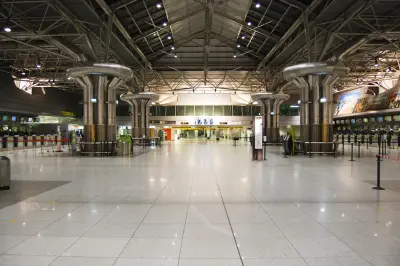
Lisbon Airport's terminal complex consists of two physical buildings serving distinct functions. Terminal 1 is the main terminal, located in the central airport area, and handles the vast majority of operations. It is organized across multiple levels with check-in counters on the upper level, departures and arrivals on respective floors, and connections to ground transport at the lower level. T1 hosts TAP Air Portugal — the airline's primary operations — alongside Star Alliance partners, full-service European carriers, and most long-haul airlines serving Lisbon.
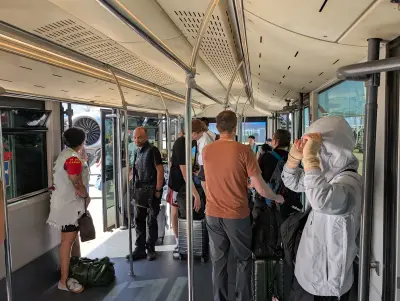
Terminal 2 is a separate, smaller building located approximately one kilometer from T1 on the northern side of the runway. It is dedicated to low-cost carriers, including Ryanair, easyJet, Wizz Air, and several other point-to-point operators. T2 has its own check-in, security, and gate areas, and travelers using it should be aware that arrivals at T2 can only be reached by a free shuttle bus from T1 if you need ground transport from the main terminal area, or by direct connections if your transport pickup is arranged at T2 itself.
Knowing which terminal your flight uses is essential because the buildings are separate and connecting between them requires the inter-terminal shuttle. If you have a connection involving both terminals, plan for at least 60 to 90 minutes of buffer time, especially with checked baggage that may not transit automatically. For a complete walkthrough of each terminal's layout, services, and gate arrangements, see our detailed terminals at Lisbon Airport page.
Getting to Lisbon Airport — All Transport Options
LIS is exceptionally well connected to central Lisbon and the surrounding region by multiple transport modes. The most popular options for travelers are the Lisbon Metro (Red Line, terminating at the airport), the Aerobus express coach service, regular city buses, taxis, and ride-share services. Each option has different cost, speed, and convenience profiles, and the right choice depends on your destination, luggage, time of day, and budget.
The Lisbon Metro Red Line (Linha Vermelha) is the most economical and efficient rail option. The Aeroporto station, located beneath Terminal 1, connects directly to São Sebastião and Alameda interchange stations, where transfers reach the rest of the city via the other metro lines. Trains run every 4 to 9 minutes between approximately 06:30 and 01:00, with journey times of about 25 to 35 minutes to most central destinations including Baixa-Chiado, Marquês de Pombal, and Cais do Sodré. The Metro is detailed in our Lisbon Airport Metro guide.
The Aerobus is a dedicated airport coach service with two routes connecting the airport to the city center, including stops at major hotels, the central railway stations, and key tourist areas. It runs every 20 minutes during the day and offers luggage-friendly service with onboard storage. Taxis from LIS operate from designated ranks outside both terminals, with metered fares typically running €15 to €25 to most central destinations. Ride-share services like Uber, Bolt, and FREENOW are widely available at LIS and often offer competitive pricing. Full coverage is in our Lisbon Airport transfers guide.
Getting from the Airport to Lisbon City Center
The journey from LIS to central Lisbon is typically the first practical question travelers face. The right answer depends on your specific destination, time of arrival, luggage, and budget. For travelers heading to the historic center (Baixa, Chiado, Alfama, Bairro Alto), the Metro Red Line with a single transfer is often the most convenient and economical option, delivering passengers to within walking distance of most central hotels for under €2.
For travelers with significant luggage, families, or those arriving late at night when public transport options thin out, the taxi or ride-share is often the simplest choice despite the higher cost. The €15-25 fare to central Lisbon is reasonable by European standards, and the journey takes 20 to 30 minutes outside peak traffic hours. For travelers heading to specific hotel zones — Parque das Nações, the riverfront, or outer neighborhoods — the optimal transport mode varies, and the dedicated getting to Lisbon city center guide breaks down each option in detail.
Late-night arrivals deserve special attention. The Metro stops running around 01:00, after which Aerobus night services and taxis remain the primary options. Pre-arranged airport transfers are also widely available and worth considering for late arrivals at unfamiliar destinations, particularly for first-time visitors who may prefer the certainty of a named driver waiting at arrivals rather than navigating taxi ranks at 02:00 in the morning.
Connecting to Cascais, Sintra, Estoril, and Beyond
Lisbon functions as the transport hub for much of central Portugal, and many travelers use LIS as the entry point for trips to nearby destinations rather than as the final destination itself. Cascais, the elegant coastal town and former royal seaside retreat, is approximately 30 kilometers west of Lisbon and is a popular day trip and short-stay destination. The journey from the airport to Cascais typically involves first reaching Cais do Sodré station via Metro and then taking the Cascais commuter line. For practical details, see our transportation to Cascais guide.
Sintra, a UNESCO World Heritage town famous for its Romantic-era palaces, fairy-tale castles, and forested hills, is an unmissable day trip for any Lisbon visitor. The most efficient airport-to-Sintra route involves first reaching Rossio station in central Lisbon and then taking the Sintra commuter line, with the full journey typically taking around 90 minutes including transfers. Estoril, neighboring Cascais along the coast, is reachable by the same Cascais line as Cascais itself, with stops along the way at Carcavelos, Parede, and São João do Estoril.
For longer-distance Portuguese travel, the country's main railway hubs — Santa Apolónia and Oriente — connect to both intercity destinations like Porto, Coimbra, and Faro, and to international services. The Oriente station is particularly convenient for airport travelers as it is on the same Metro Red Line that serves the airport. Our dedicated transportation to the train station guide covers connections between LIS and Lisbon's main rail terminals.
Parking Options at Lisbon Airport
Lisbon Airport offers a range of parking options to suit different needs and durations. The official ANA parking facilities are organized by terminal, with separate short-stay (Express), medium-stay (P1, P2), and long-stay (Low Cost / Long Stay) lots. Express parking is located closest to the terminals and is intended for stays of up to a few hours — useful for picking up arriving passengers but expensive for longer use. P1 and P2 are general-purpose lots suitable for stays of a few hours to a few days, while the Long Stay lot offers significantly lower daily rates and is connected to the terminals by free shuttle buses.
For travelers parking for a week or longer, the airport's online booking system offers substantial discounts compared to drive-up rates. Booking in advance can reduce parking costs significantly. Several private off-airport parking operators also serve LIS, typically offering lower rates with a free shuttle to the terminals. These off-airport options can be a strong choice for budget-conscious travelers, though they require slightly more time at both ends of the trip. For complete information including current rates, location maps, and booking procedures, see our parking at Lisbon Airport guide.
If you are renting a car for your stay in Portugal, the airport's car rental center is co-located with the parking facilities and serves both terminals. All major international rental companies operate at LIS, including Hertz, Avis, Europcar, Sixt, Enterprise, and several lower-cost local operators. Comprehensive details on rates, pickup procedures, insurance considerations, and tips for driving in Portugal are available in our Lisbon car rental guide.
Hotels at and Near the Airport
Travelers needing accommodation near Lisbon Airport — whether for an early-morning flight, a late-night arrival, or a layover that extends into the next day — have several solid options. Several hotels are located within walking distance or a short shuttle ride of Terminal 1, ranging from international chains to Portuguese boutique properties. The on-airport area itself does not have a hotel directly inside the terminal building, but several properties are close enough that the practical convenience is similar.
A larger cluster of hotels sits in the Parque das Nações area, a modern district approximately 10 minutes from the airport by taxi or 15 minutes by Metro. This area was developed for the 1998 World Expo and has been progressively redeveloped into a desirable residential and commercial zone, with international chains like Tivoli, Mélia, Olissippo, and others maintaining properties there. Most offer free or paid airport shuttle service. Booking a hotel with a confirmed shuttle service is recommended, particularly for early-morning departures when public transport options are limited.
For travelers who prefer to be in central Lisbon but need easy airport access, hotels along Metro Line 1 or near Oriente station offer good compromise options. They are not "airport hotels" but they connect to LIS in 15 to 25 minutes via direct or single-transfer Metro service. Our complete guide on hotels near Lisbon International Airport covers properties at every price point, with shuttle policies, distances, and traveler tips.
Eating, Shopping, and Amenities Inside the Terminals
Lisbon Airport offers a solid range of food, retail, and service options across both terminals, with Terminal 1 having the more extensive selection. T1 includes Portuguese-style cafés, casual restaurants serving local cuisine, international chains, and several bakery counters featuring Portuguese specialties like pastel de nata, the famous custard tart that is essentially a national symbol. The Portuguese coffee culture is also well represented, with espresso bars throughout the terminal where you can experience traditional bica (the local equivalent of an espresso) before your flight.
Retail at LIS is similarly extensive, with all major luxury brands represented in the international departure areas alongside more accessible Portuguese brands like Claus Porto (artisanal soaps), Vista Alegre (porcelain), and various wine and food specialty retailers. Portuguese specialty products — port wine, Madeira wine, olive oil, sardines, cheeses, and traditional sweets — are widely available and often make good last-minute gifts. The duty-free area in T1 is particularly comprehensive for an airport of LIS's size.
Practical amenities include extensive ATM coverage from major Portuguese banks (Caixa Geral de Depósitos, Millennium BCP, Santander), currency exchange counters, pharmacies, post offices, lost-and-found services, and prayer rooms. Free WiFi is available throughout both terminals and is generally fast and reliable. Charging stations and workspaces are scattered through the gate areas. Terminal 2's amenities are more modest but cover all essential needs for low-cost travelers.
Lounges and Premium Services
Lisbon Airport hosts a range of airline lounges and pay-per-use lounge facilities catering to business travelers, premium-cabin passengers, and frequent flyers. TAP Air Portugal operates its main premium lounges in T1, accessible to TAP Plus elite members, Star Alliance Gold members, business and first-class passengers on TAP and partner airlines, and lounge-pass purchasers. The TAP lounges are well-regarded with extensive food and beverage selections, quiet zones, showers, and good views of the airfield.
Other lounges at LIS include the ANA Lounge, accessible via Priority Pass and similar programs, and various contracted lounges used by smaller airlines. Pay-per-use access is available through Priority Pass, LoungeKey, and direct walk-in payment. Typical walk-in prices range from €30 to €45 per visit, depending on the lounge and time of day.
Premium ground services, including fast-track security access, meet-and-greet escorts, and private VIP terminal services, are also available for travelers willing to pay for additional convenience. These services can be particularly useful for very tight connections, families with young children, or travelers with reduced mobility who want a less stressful airport experience.
Practical Information: Security, Customs, ATMs, WiFi
Security procedures at LIS follow standard European Union protocols. Liquids must be in containers of 100ml or less and packed in a single transparent resealable bag of one liter or less; laptops and large electronics typically need to come out of carry-on bags at the screening point. Allow at least 60 minutes for security and any post-security walking time during peak periods, and longer if you are traveling during summer holidays or on heavy departure days. Lisbon's compact terminal layout means walking distances are generally shorter than at sprawling hubs like Madrid or Frankfurt.
Customs and immigration are organized according to whether your flight is intra-Schengen (no passport check), within the EU but outside Schengen (some controls), or international (full controls). LIS's international arrivals area can experience significant queues during peak times, particularly when multiple long-haul flights arrive in the morning from the Americas. Allow at least 45 to 60 minutes for clearing passport control and customs if you are arriving on an international flight, and longer if you have a connecting flight.
ATMs from major Portuguese banks are located throughout both terminals. Most accept all major international cards and dispense euros at standard exchange rates with the issuing bank's foreign-exchange fees. Currency exchange counters are widely available, though the rates are generally less favorable than ATM withdrawals. Free WiFi is available throughout the airport with no time limit, and the network is typically fast enough for video calls, streaming, and remote work.
Tips for Travelers — Peak Times, Connections, and Common Pitfalls
Lisbon Airport is generally efficient but has specific operational characteristics worth understanding. The airport's busiest periods are the morning departure rush (roughly 06:00 to 09:00 AM), the late-afternoon transatlantic departure window (approximately 4:00 to 7:00 PM), and Sunday evenings when leisure traffic peaks. During these periods, expect longer security lines, busier check-in counters, and slower service at airport restaurants.
One distinctive feature of LIS is its single primary runway, which can produce delays during weather events or peak traffic that would not occur at multi-runway airports. If your flight is during a busy period and weather forecasts are uncertain, build in additional buffer time. Connecting flights through LIS typically work well within Star Alliance and TAP itineraries, but inter-terminal connections to T2 should be planned with at least 90 minutes of buffer.
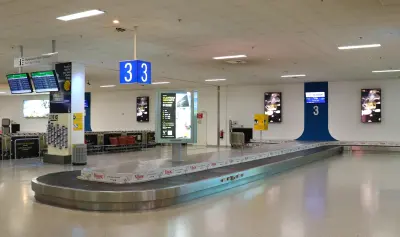
For arriving passengers, the typical bottlenecks are passport control on international flights and the wait for checked baggage. Both can be slow during peak times. If you are connecting onward and have only checked baggage, factor in at least 30 minutes between flight arrival and the time you can realistically be on a metro or bus toward the city. For arrivals timing details, see Lisbon Airport arrivals; for departure timing and pre-flight planning, see departures information.
Layover at Lisbon Airport
Layovers at Lisbon Airport are common, especially for travelers connecting between Latin America, Africa, and Europe via TAP Air Portugal or its Star Alliance partners. The good news is that LIS is a pleasant European airport to spend time in. Terminal 1 has decent dining options, comfortable lounge access for premium travelers, and a manageable layout that makes it easy to find quiet spots during longer waits.
For shorter layovers (under 3 hours), staying within the terminal and finding a café, lounge, or quiet corner is generally the right approach. For longer layovers (4 to 8 hours), travelers with the appropriate visa status can consider exiting the airport and visiting central Lisbon — the Metro Red Line can deliver you to the city center in about 30 minutes, allowing time for a quick meal at a riverside café, a short walking tour of Baixa or Alfama, or a visit to a nearby attraction like the Gulbenkian Museum. The TAP Stopover program even allows free multi-day stops in Lisbon on certain transatlantic itineraries.
For overnight layovers, the cluster of hotels in Parque das Nações or with airport shuttles provide reliable options. Sleeping inside the terminal is technically possible — LIS is generally safe and quiet at night — but it is not recommended for travelers who can avoid it. Our dedicated layover guide provides specific strategies for layovers of various lengths.
TAP Air Portugal as the Main Hub Carrier
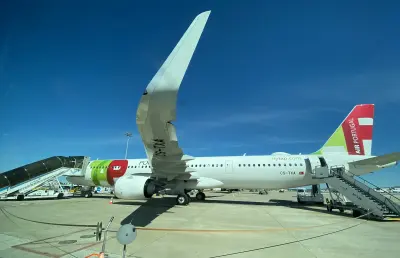
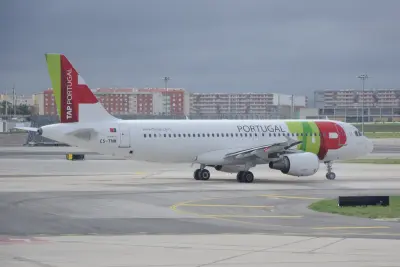
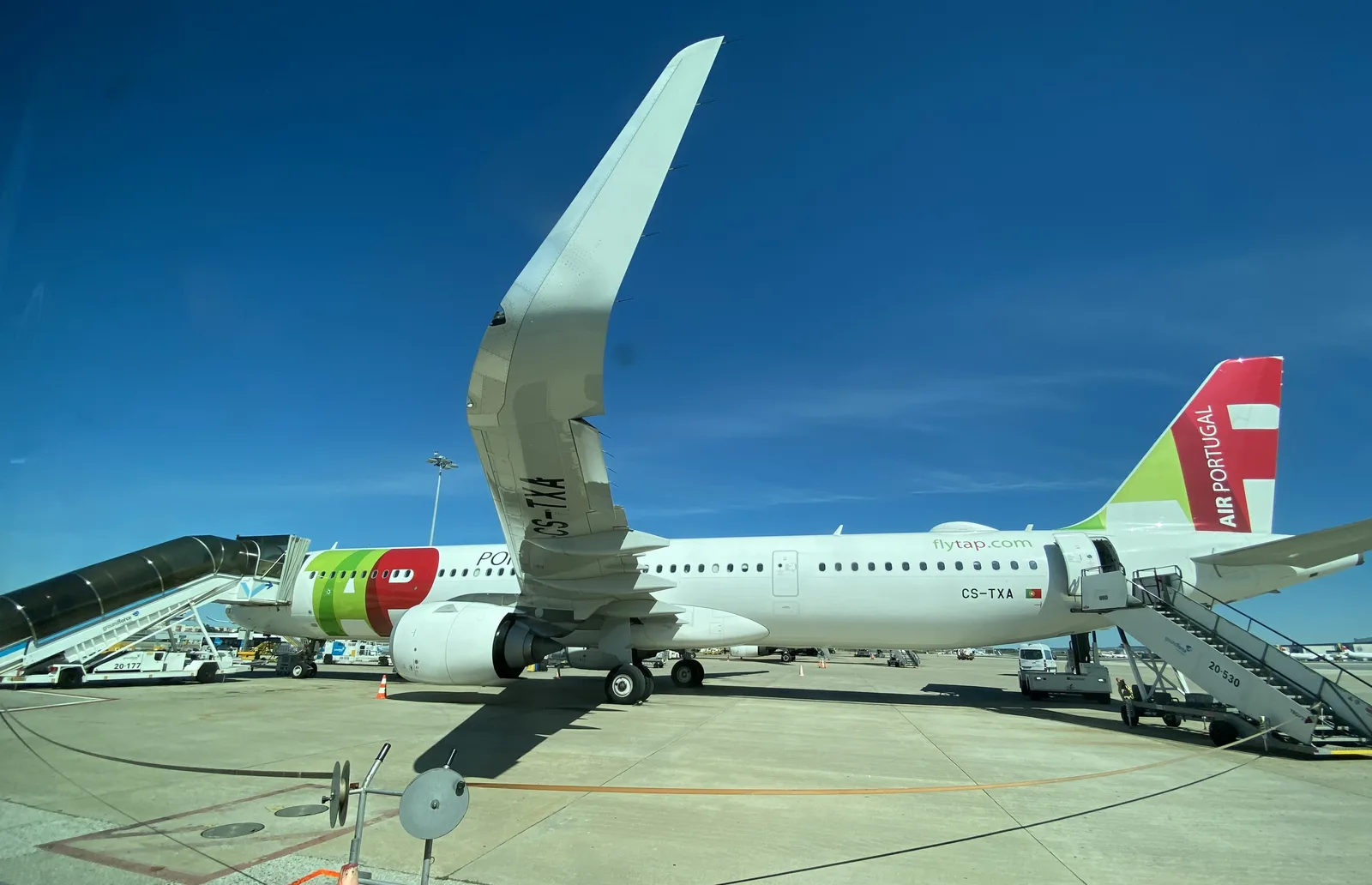
TAP Air Portugal is the dominant airline at Lisbon Airport, operating the largest share of long-haul flights and a substantial European network. As Portugal's flag carrier and a Star Alliance member, TAP uses LIS as its primary global hub, with a particular strength in transatlantic routes to Brazil, the United States, Canada, and to a lesser extent African destinations. Its long-haul fleet includes Airbus A330neo and A321LR aircraft, and its European operations are conducted with A319, A320, and A321 narrowbodies.
TAP's hub-and-spoke model means that significant connecting traffic flows through LIS, with passengers from many secondary European cities transferring at Lisbon onto long-haul flights to the Americas. This creates predictable wave patterns of arrivals and departures and contributes to the rhythm of LIS operations. The airline has expanded substantially in recent years, opening new long-haul routes and improving its product, though scheduling reliability has been variable through industry challenges.
Other airlines based at LIS include Easyjet (low-cost European), Ryanair (low-cost European, T2), Wizz Air (low-cost European, T2), and various smaller Portuguese and international carriers. The full list of airlines at Lisbon Airport covers each carrier's terminal assignment, route network, and service characteristics.
Useful Contacts and Final Tips
The official airport operator ANA Aeroportos de Portugal maintains real-time flight information, terminal maps, parking booking, and customer service contacts on its main website. ANA also operates a customer service phone line that handles general airport inquiries, lost-and-found, and assistance for passengers with reduced mobility. For lost luggage specifically, contact your airline first; if the bag was lost within the airport rather than during transit, ANA's lost-and-found office handles those cases.
For ground transport information, Carris (the city bus operator), Metropolitano de Lisboa (Metro), and CP (railways) all maintain English-language websites with current schedules, fares, and service alerts. For taxi services, the regulated Portuguese taxi system uses meters in central Lisbon, and complaints can be lodged through ANSR (the road safety authority). Several of the topics in this overview are covered in greater depth on dedicated sub-pages of this site, including the Lisbon Airport taxis and Lisbon Airport shuttle buses guides.
If you are visiting Lisbon for the first time, the most useful preparation is to review the terminal that your flight uses, decide on your preferred ground transport option, and have a backup plan in case your flight is delayed and you arrive outside normal Metro hours. Most travelers find that LIS is straightforward to navigate once they understand the basic geography and standard ground transport options. The Lisbon Card, available at the airport tourist information desk, can be a worthwhile investment if you plan to use public transport extensively and visit multiple museums during your stay, combining transport access with discounted attraction entry.
And if you are simply layover-ing through LIS, you have one of Europe's more pleasant connecting airports for the experience. The TAP lounges, the warm Portuguese hospitality, and the genuinely good food and coffee options make even a long layover enjoyable. With a bit of preparation, your time at LIS can be a smooth and even rewarding part of your overall journey rather than something to merely endure.